View Charts
The De-Dollarization Era: Unraveling the Implications of a Multi-Currency World
 0
0
Source: Canva
A New Financial Revolution: De-Dollarization in 2023
In 2023, a remarkable trend has arisen on the international stage, profoundly challenging the status quo of global finance - the de-dollarization movement. Countries such as Russia, India, China, Brazil, and Malaysia, possessing formidable economies in their own rights, have begun strategizing and implementing measures to reduce the entrenched influence of the U.S. dollar in their international transactions. This effort is aimed at constructing a series of bilateral and multilateral trade channels that can operate independently of the U.S. dollar.
The reasoning behind this shift is manifold. For one, it is an attempt to navigate the economic aftermath of a worldwide pandemic, which has underscored the vulnerabilities inherent in an overly dollar-dependent global financial system. Secondly, there's an increasing desire among these nations to exert more autonomy over their economic policies, free from the influence of U.S. monetary policy decisions.
Additionally, political motivations cannot be discounted. The de-dollarization movement also stems from a broader geopolitical power play, where emerging economies seek to dilute U.S. dominance and influence over global economic matters.
This concerted push for de-dollarization signals a potential paradigm shift in the world economy. As these countries set up new trade channels bypassing the U.S. dollar, we witness a reshaping of global power dynamics in the international financial system. This wave of change has catalyzed a pivotal debate among economists, policymakers, and investors worldwide: Is the age of the U.S. dollar's dominance in international trade nearing its twilight? Is the world ready to embrace a new multi-currency era?
It's not a simple question to answer, considering the deep-seated roots and the established status of the U.S. dollar in global finance. To better understand the significance and potential impact of this de-dollarization movement, it is crucial to delve into the historical context, examine the current factors contributing to the dollar's status, and consider the potential challenges and benefits this shift could bring.
Journey of the Reserve Currency: From Gold to Dollar Dominance
The notion of a dominant global reserve currency isn't new; it has evolved in concert with the shifts in global economic power. In the early centuries, the currencies of powerful colonial empires like Spain, France, and England served as the globe's preferred medium for international trade. These currencies were usually backed by substantial gold reserves, reflecting the economic might and stability of these nations.

Source: Canva
However, the 20th century saw a pivotal shift in this pattern. The aftermath of World War I ushered in a new era where the U.S. emerged as a burgeoning global power. Its formidable role in the war, combined with an unprecedented economic boom, highlighted the strength and stability of the U.S. dollar. New York began to outshine London as the world's financial capital, drawing a wealth of international investments.
The true coronation of the U.S. dollar came with the Bretton Woods Agreement in 1944. This accord, negotiated by representatives of 44 nations, formally instituted the dollar as the world's reserve currency, replacing the British pound sterling. Under the agreement, currencies were pegged to the U.S. dollar, which itself was linked to gold, thereby providing stability in the chaotic post-war economy.
The system, however, underwent a drastic change in 1971 when President Richard Nixon decided to unpeg the U.S. dollar from gold in what is now known as the 'Nixon Shock.' This unprecedented move transformed the dollar into a fiat currency, meaning its value is not backed by any physical commodity but solely by the trust in the U.S. government - the 'full faith and credit' doctrine.
This landmark transition has since stirred continuous debate about the sustainability of the U.S. dollar as the world's reserve currency. The reliance on the strength and credibility of a single nation's economy sparked a global discussion on the vulnerabilities and potential alternatives to the dollar-dominated system, setting the stage for the current de-dollarization movement.
The Enduring Power of the Dollar: Petrodollars and Trade Necessities
The U.S. dollar's dominance in the global economic realm has been a result of key systemic factors that have solidified its position over time. One such major factor is the establishment of the 'petrodollar' system.

Source: Canva
The 'petrodollar' system was born out of a series of agreements between the U.S. and Saudi Arabia in the 1970s. The deal ensured that the majority of global oil transactions would be denominated in U.S. dollars. The crux of the agreement was that Saudi Arabia, and subsequently other OPEC nations, would sell their oil solely in U.S. dollars. In exchange, the U.S. would provide military support and protection to these nations. This arrangement led to sustained demand for the U.S. dollar, as nations globally needed to maintain sizeable reserves of the currency to engage in the international oil market. The 'petrodollar' system has been a significant linchpin in the continued prominence and strength of the U.S. dollar.
Further, the need for a universal medium of exchange in global commerce has consistently reinforced the U.S. dollar's position. The rise of global interconnectedness has amplified the necessity for a common currency to facilitate international trade transactions. Given the perceived stability, liquidity, and acceptance of the U.S. dollar worldwide, it has effectively fulfilled this role.
Let's consider a trade scenario between an Australian wine producer and a Norwegian seafood importer. Suppose the Australian producer wants to sell wine to a Norwegian company. It would be cumbersome and inefficient for the transaction to occur in either Australian dollars or Norwegian krone due to potential currency risks and the intricacies of currency conversion for one or both parties. The U.S. dollar, with its global acceptance, serves as the common currency, simplifying trade transactions and eliminating the need for complicated currency conversions. This practice, where the dollar functions as the 'vehicle currency' in international trade, underpins its universal value and usage.
The Ongoing Search for Alternatives: Aiming Beyond the Dollar
In spite of the U.S. dollar's reigning supremacy, there has been a sustained endeavor to find alternative global currencies. This quest has primarily been driven by the inherent risks associated with a mono-currency system and the desire to create a more balanced and diversified international financial landscape.
Source: Canva
When the euro was launched in 1999, it was seen as a strong potential contender to the U.S. dollar. The Eurozone represented a significant portion of the global economy, and the euro promised to provide a robust alternative. However, the euro's journey has been fraught with multiple economic and political challenges. The sovereign debt crisis that began in 2009 exposed structural flaws within the Eurozone. This crisis, coupled with ongoing political uncertainties such as Brexit, has hampered the euro's potential ascent to replace the dollar.
Japan, another major global economy, has also been considered. Yet, its potential to compete against the U.S. dollar has been hindered due to its long-standing economic stagnation, known as the 'Lost Decades,' and a demographic crisis marked by a declining and aging population.
The Chinese yuan (Renminbi) has been viewed as a viable contender due to China's remarkable economic growth and increasing international influence. However, China's strict capital controls, which restrict the flow of money in and out of the country, limit the yuan's global utility. Despite recent efforts by Chinese authorities to internationalize the yuan, these controls undermine the currency's potential as a viable global reserve currency.
Smaller economies like Switzerland, despite their stable currencies, face the challenge of scale. The Swiss franc, while symbolizing stability and strength, lacks the necessary economic size to support the large-scale capital flows associated with a global reserve currency. The Swiss economy's limited size, compared to the U.S., Eurozone, or China, restricts the franc's capacity to act as a global alternative to the dollar.
The search for an alternative to the U.S. dollar highlights a broader desire for a multi-polar global currency system. However, it also illustrates the complex challenges associated with transitioning from the current dollar-centric system to a more diversified landscape.
Winds of Change: The Rising De-dollarization Movement
The recent years, specifically 2022 and 2023, have witnessed a renewed push for an alternative to the dollar as the global reserve currency. A crucial factor in this push was the U.S.'s stringent sanctions against Russia following its invasion of Ukraine. These sanctions, which effectively froze a significant portion of Russia's foreign reserves, alarmed other nations, exposing the potential vulnerability of their own assets. The situation highlighted how geopolitical disputes could directly impact a country's financial reserves, leading to calls for a more balanced international monetary system.

Source: Canva
This heightened sense of vulnerability and discontent with the dollar-centric global financial system has catalyzed what is now being referred to as the "de-dollarization" movement. The aim is to diversify away from the dollar, thereby reducing exposure to the unilateral policies of the U.S. Central banks, particularly in emerging markets such as Russia, India, China, Brazil, and Malaysia, have taken notable steps in this direction by setting up trade channels that bypass the dollar.
Consequently, the U.S. dollar's share of global foreign exchange reserves has been gradually declining. According to data from the International Monetary Fund (IMF), as of 2023, the dollar now represents approximately 58% of these reserves, hitting a record low in over two decades. Although still substantial, this decline represents a shift in the international monetary landscape.
Interestingly, gold - often considered a "safe haven" asset - has seen a resurgence in its share of global reserves. From constituting 11% of reserves five years ago, gold now represents 15%. This increase suggests a growing preference for tangible assets that are less vulnerable to the fluctuations of any one nation's economic policy or geopolitical tensions.
The ongoing de-dollarization movement hints at a potential recalibration of the global financial order. However, the actual transition is fraught with complexities and uncertainties. It's still unclear what currency or asset could replace the dollar's role, or even whether a single alternative is feasible in today's interconnected global economy.
The Shaky Ground: Inflation and Banking Crises
Unfolding financial challenges are threatening to further destabilize the dollar's standing on the global stage. A significant concern is the recent surge in inflation rates in the U.S. For decades, the U.S. has enjoyed a reputation for maintaining steady, low inflation rates, making the dollar an attractive option for countries looking for a stable currency to hold their foreign reserves. However, this steady track record was disrupted as inflation rates began to rise sharply. The resulting erosion of purchasing power erodes the perceived safety of the dollar as a repository for long-term savings and investments, casting a shadow of uncertainty over its future as the dominant global reserve currency.
Source: Canva
Compounding this problem is the banking crisis of 2023, which resulted in the collapse of several prominent U.S. banking institutions, including Silicon Valley Bank, First Republic, Signature, and Silvergate. Despite the size and credibility of these institutions, they succumbed to a financial crisis that required intervention from the U.S. Treasury and the Federal Reserve. The sight of such prominent financial institutions facing critical problems has certainly undermined the perception of the U.S. economy's stability. This is particularly significant because banking crises and economic instability are typically associated with emerging markets, not a country that hosts the world's leading economy.
The combination of soaring inflation and the banking crisis has added fuel to the de-dollarization movement. As confidence in the dollar erodes, other nations are increasingly motivated to seek alternatives and lessen their reliance on the U.S. dollar as the world's reserve currency. The ongoing uncertainty surrounding these issues suggests that the landscape of international finance may continue to shift and evolve.
The Rise of a Multipolar Financial World
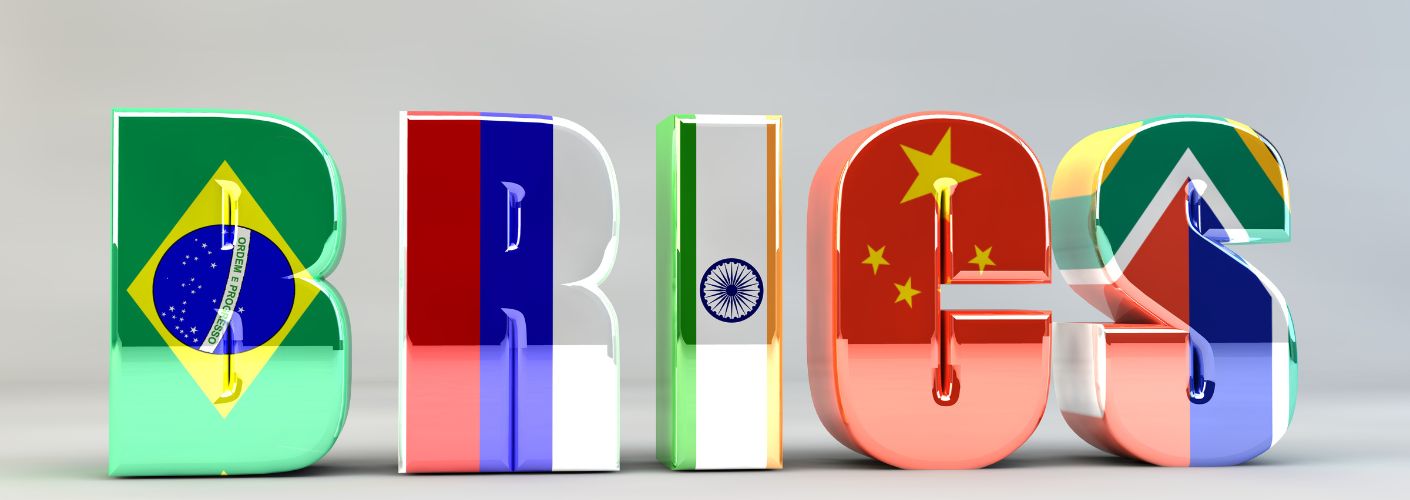
In the midst of the ongoing uncertainties plaguing the U.S. dollar, an alternate vision for the future of international finance has started to gain traction. Leaders from several major emerging economies, including China, Russia, India, and Brazil, have proposed the idea of trading directly with each other using their own currencies.
Source: Canva
Under this model, instead of a Brazilian company needing to acquire U.S. dollars to pay an Indian supplier, for example, they could instead pay directly in Brazilian real, which the Indian supplier could then convert into Indian rupees. Likewise, a Chinese company buying Brazilian goods could pay in yuan, which the Brazilian company could then convert into reals. This type of direct exchange not only eliminates the need for the dollar as an intermediary but also lowers transaction costs and risks associated with currency exchange.
In practice, the move towards this model would signify a substantial shift in the dynamics of international trade and finance. It would not only decrease the global economy's dependence on the U.S. dollar but also redistribute the balance of financial power. The result could be the emergence of a multipolar financial world, in which multiple strong economies, including those of emerging nations, would have a greater say and influence over global financial affairs.
Of course, implementing such a change on a global scale is no small task. It requires not only cooperation among participating nations but also the development of robust financial systems and mechanisms to support these direct exchanges. Furthermore, the success of this model would hinge on the strength and stability of these nations' currencies. In a multipolar financial world, any significant economic turbulence in one of these countries could have a ripple effect, potentially destabilizing the entire system.
Nonetheless, this vision of a multipolar financial world is a powerful testament to the changing tides in global finance. As emerging economies continue to grow in strength and influence, the era of the U.S. dollar's unchallenged dominance may indeed be coming to an end.
Investor Implications: A Changing Landscape
The acceleration of the de-dollarization trend carries significant implications for the international investor community. This shift denotes a marked transition in the global economic order and challenges the previously unchallenged hegemony of the U.S. dollar in the financial markets. With the potential decrease in the dollar's status as the world's reserve currency, investors can expect to see increased currency fluctuations and heightened geopolitical tensions, both of which can profoundly influence international investment strategies.

Source: Canva
In a scenario where the U.S. dollar's value diminishes, the cost of commodities, the majority of which are priced in dollars, could rise significantly. This scenario would impact everything from the cost of everyday items to large-scale infrastructure projects, leading to widespread economic repercussions. Investments traditionally considered safe, like U.S. Treasury bonds, could lose their appeal, leading investors to seek alternatives.
Similarly, international corporations, which often hold large amounts of dollar-denominated debt, could find themselves navigating challenging financial waters. A weaker dollar could increase their debt burdens and affect their ability to conduct business, leading to potential impacts on their stock prices.
The Road Ahead: Embracing Uncertainty
While it is too soon to definitively foretell the U.S. dollar's decline, the shifting dynamics underscore the importance of robust risk management strategies, notably the value of a diversified investment portfolio. Such diversification helps to cushion against potential currency risks and provides investors with a level of insulation from sudden shifts in currency valuations.
Beyond investment strategy, these changes also illuminate the need for investors, financial institutions, and policymakers alike to remain agile in the face of evolving global financial trends. As the de-dollarization movement gains momentum, market participants will need to adjust to new realities, embrace novel opportunities, and manage unforeseen risks.
The chronicle of the U.S. dollar's reign and the rising tide of the de-dollarization movement is a compelling testament to the fluid nature of economic power. It's a vibrant reminder of the continuous interplay of currencies in the global financial theatre, with each act setting the stage for the next in an unending cycle of economic evolution. As we witness this new chapter unfold, we are reminded that the only constant in the global economy is change itself.