View Charts
Rare 1999 State Quarter Errors on Sacagawea Planchets
 0
0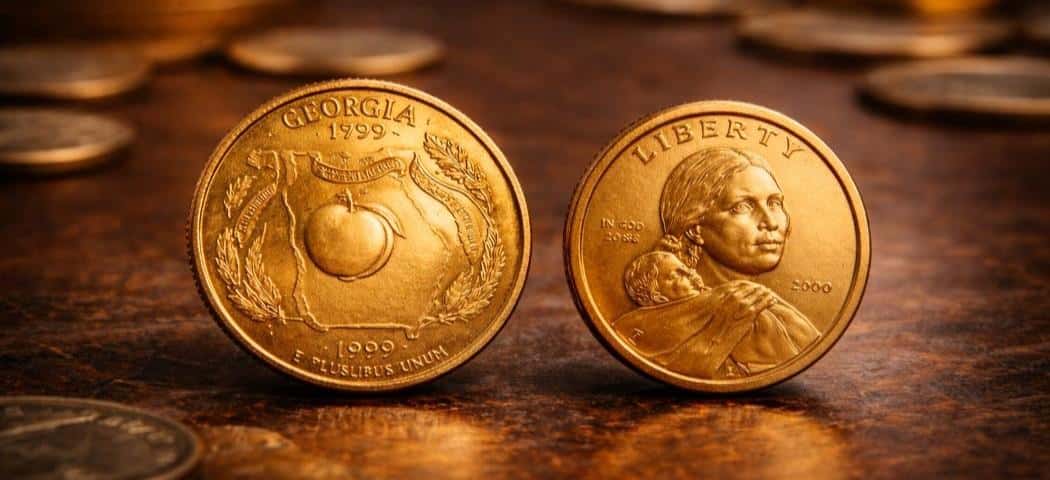
A Rare Transitional Error in 1999 State Quarters
Among modern U.S. coinage, few discoveries have generated as much intrigue as the 1999 State Quarters struck on experimental Sacagawea dollar planchets. These rare coins represent a fascinating overlap between two major U.S. Mint initiatives—the launch of the State Quarter program and the development of the golden Sacagawea dollar.
Collectors searching for 1999 state quarter errors, experimental planchet coins, or rare modern U.S. Mint varieties often encounter these pieces as one of the most valuable and historically significant discoveries of the modern era. While much of the precious metals market focuses on movements in the gold spot price and silver spot price, numismatic rarities like these highlight how value can also be driven by scarcity, historical significance, and collector demand.
What Are 1999 Quarters on Sacagawea Planchets?
In 1999, the U.S. Mint was finalizing the manganese-brass alloy that would be used for the Sacagawea dollar, introduced the following year. During internal testing, a small number of state quarters were struck using experimental planchets intended for this new composition.
These coins were never meant for circulation, yet a limited number escaped into the marketplace. Today, they are known as state quarters struck on Sacagawea planchets, a highly specialized and valuable category within modern U.S. Mint errors. Fewer than 20 examples are believed to exist across all five designs, making them exceptionally rare.
Which 1999 State Quarters Exist on Experimental Planchets?
All five original 1999 State Quarter designs have been confirmed on experimental planchets:
-
Delaware
-
Pennsylvania
-
New Jersey
-
Georgia
-
Connecticut
While this suggests the possibility of a complete set, the reality is far different. Each design exists in extremely limited numbers, often only a few examples per state, making it virtually impossible to assemble a full set.
Which State Is the Rarest?
Due to the extremely small population, determining the rarest state is not an exact science. However, based on auction appearances, certification data, and market visibility, certain patterns have emerged:
-
Pennsylvania — Often regarded as the rarest, with very few high-grade examples known
-
Delaware — Also extremely scarce and highly sought after
-
New Jersey — Confirmed but rarely seen in public auctions, suggesting extremely limited availability
-
Connecticut — Rare but has appeared occasionally in major auctions
-
Georgia — Slightly more available than other states, with multiple confirmed auction records
In many cases, only three to five confirmed examples exist per state. Because of this, even a single new discovery can significantly alter perceived rarity rankings.
Real Auction Examples
These coins have consistently achieved strong results in major numismatic auctions, reflecting both their rarity and collector demand:
Pennsylvania 1999 Experimental Planchet Quarter
-
Auction House: Heritage Auctions
-
Date: October 2006
-
Grade: PCGS MS67
-
Price Realized: $10,200
This example remains one of the highest publicly recorded sales and demonstrates the premium commanded by top-grade specimens.
Pennsylvania 1999 Experimental Planchet Quarter (Second Example)
-
Auction House: Heritage Auctions
-
Date: January 2020
-
Grade: PCGS MS64
-
Price Realized: $2,640
This sale highlights the significant impact that grade and eye appeal have on value.
Delaware 1999 Experimental Planchet Quarter
-
Auction House: Heritage Auctions
-
Date: May 2008
-
Grade: PCGS MS66
-
Price Realized: $4,888
One of the earliest Delaware examples to appear publicly, reinforcing the scarcity of this design.
Additional Auction Insights: Georgia, Connecticut, and New Jersey
Further supporting the rarity and market behavior of these coins, additional state-specific auction data provides useful context.
-
Georgia 1999 Experimental Planchet Quarter
Georgia examples have appeared in multiple Heritage Auctions sales, including a PCGS MS65 specimen that realized approximately $2,160 in February 2020. Higher-grade examples have also surfaced, demonstrating that while still rare, Georgia pieces are among the more frequently traded within this category. -
Connecticut 1999 Experimental Planchet Quarter
Connecticut examples are confirmed and have appeared in major auctions, though less frequently than Georgia. High-grade specimens have realized prices generally ranging between $5,000 and $8,000, depending on condition and eye appeal. Their limited appearances reinforce Connecticut as a scarce but established member of this experimental group. -
New Jersey 1999 Experimental Planchet Quarter
New Jersey specimens are confirmed to exist but are notably absent from major public auction records. This suggests that most known examples are held in private collections or have traded privately, making them one of the least visible—and potentially rarest—issues in the series.
Market Value Overview
Across all confirmed examples, values typically range from $2,000 to over $10,000, with exceptional pieces exceeding that range depending on grade and demand. These coins consistently attract advanced collectors and specialists in modern mint errors.
How to Identify a Sacagawea Planchet Quarter
Collectors who believe they may have discovered one of these rare coins should look for several key characteristics:
-
A distinct gold or greenish coloration rather than the standard silver tone
-
A weight slightly higher than a normal quarter’s 5.67 grams, typically between 5.9 and 6.3 grams
-
An edge that lacks the traditional copper-nickel clad stripe
-
A slightly thicker planchet compared to standard issues
Weight is often the most reliable indicator, as plated or altered coins will usually retain the standard weight of a regular quarter.
Why These Coins Exist: A Transitional Mint Error
These coins are classified as transitional errors, created during a period when the U.S. Mint was transitioning from one coin composition to another. Instead of using full-sized dollar blanks for early testing, the Mint used quarter-sized planchets with experimental alloys.
This unique overlap between two coin programs resulted in one of the most fascinating error categories in modern numismatics, offering collectors a tangible link to a key moment in U.S. Mint history.
What To Do If You Think You Found One
If you suspect you have discovered one of these rare coins, it is important to take the following steps:
1. Avoid Cleaning the Coin
Cleaning can permanently damage the surface and significantly reduce value.
2. Check the Weight Carefully
Use a precise scale to determine whether the coin falls within the expected range for an experimental planchet.
3. Examine the Edge and Color
Look for the absence of a copper stripe and a distinct golden tone.
4. Submit for Professional Authentication
Have the coin evaluated by a reputable grading service such as PCGS or NGC to confirm authenticity.
Because of their value, proper authentication is essential, as many altered or plated coins can appear similar at first glance.
Why Collectors Value These Coins So Highly
The appeal of these coins is driven by three primary factors:
-
Extreme rarity, with fewer than 20 known examples
-
Historical significance, tied directly to the development of the Sacagawea dollar
-
Strong auction performance, demonstrating consistent demand
For collectors of rare U.S. coins and modern mint errors, these pieces represent one of the most compelling opportunities in contemporary numismatics.
A Modern Rarity With Lasting Significance
The 1999 State Quarters struck on experimental Sacagawea planchets stand as one of the most remarkable discoveries in modern U.S. coinage. Although all five designs have been confirmed, their extreme scarcity ensures that they remain among the most elusive coins available to collectors today.
As interest in modern errors continues to grow, these coins serve as a benchmark for rarity, historical importance, and long-term value—highlighting how even recent coinage can produce extraordinary numismatic treasures.