View Charts

Precious Metals Slide as Economic Data Fuels Rate Hike Fears
 0
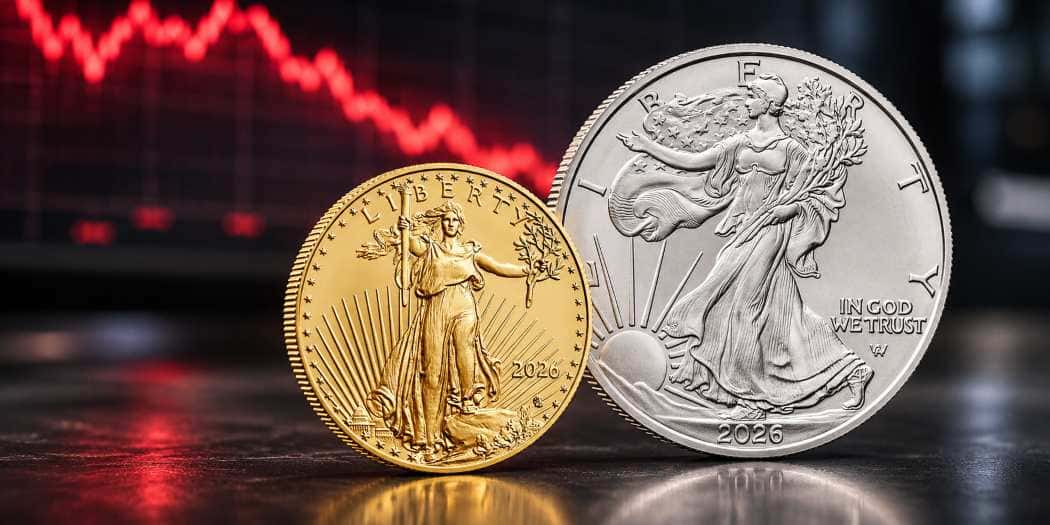
Gold and Silver Extend Losses Following Fresh Inflation Data
Precious metals prices fell sharply on Wednesday, November 25, after a series of U.S. economic reports revealed stronger-than-expected economic growth, persistent inflation and continued labor market resilience. The figures reinforced expectations that the Federal Reserve will raise interest rates in December, while raising questions about how much additional monetary tightening could follow.
As of 9:10 AM ET, the gold price had declined 2.08% to $3,481.50 per troy ounce, while the silver price fell 3.92% to $39.22. Platinum dropped 2.60% to $1,238, and palladium declined 2.14% to $823. Selling pressure intensified following the 8:30 AM economic releases, with all four metals extending their earlier losses.
The decline comes at a particularly challenging moment for precious metals. Inflation remains considerably above the Federal Reserve's target, economic growth has exceeded earlier estimates, and uncertainty surrounding U.S. trade policy threatens to complicate the inflation outlook. Although persistent inflation traditionally supports interest in tangible assets, investors are currently assigning greater importance to the monetary policy response it may provoke.
Core PCE Inflation Accelerates to 3.3%
The Bureau of Economic Analysis released its October Personal Income and Outlays report Wednesday morning, showing that annual headline inflation, measured by the Personal Consumption Expenditures Price Index, reached 3.8%. Core PCE inflation, which excludes volatile food and energy prices, accelerated to 3.3%, exceeding economists' expectations of 3.2% and September's reading of 3.1%.
Both headline and core prices increased 0.3% from the previous month. Personal income rose 0.7%, while consumer spending increased 0.3% in nominal terms. After adjusting for inflation, however, consumer spending was essentially unchanged, suggesting that households are encountering greater difficulty translating income gains into additional purchasing power.
The distinction between nominal and inflation-adjusted spending is important. Although the economy continues to generate income growth, higher prices are absorbing part of that improvement. Persistent inflation alongside stagnant real consumption presents policymakers with an increasingly difficult balance between restoring price stability and preserving household demand.
For precious metals markets, Wednesday's inflation figures weaken the argument that existing monetary restrictions are sufficient. Core inflation's renewed acceleration could encourage Federal Reserve officials to maintain restrictive policy beyond December, extending the period during which interest-bearing assets compete more aggressively with bullion.
Stronger Economic Growth Gives the Fed Room to Tighten
The inflation report was accompanied by a substantial upward revision to third-quarter economic growth. According to the BEA's second estimate of gross domestic product, real U.S. GDP expanded at an annualized rate of 4.3%, compared with an initial estimate of 3.4% and second-quarter growth of 2.2%.
Upward revisions to investment and consumer spending accounted for much of the improvement. Real final sales to private domestic purchasers, which combine consumer spending and private fixed investment, increased at an annualized rate of 5.8%. That measure suggests underlying domestic demand was stronger during the third quarter than the original GDP estimate indicated.
The significance for monetary policy extends beyond the headline growth figure. A central bank confronting persistent inflation in a rapidly expanding economy generally has greater flexibility to raise borrowing costs than one facing an imminent recession. Wednesday's GDP revision reduces the immediate economic justification for accommodating above-target inflation.
Labor market conditions remain another consideration. Resilient employment can sustain household incomes and consumption, potentially prolonging inflationary pressures. However, GDP measures activity from an earlier quarter, and October's stagnant inflation-adjusted spending provides a reminder that economic momentum may already be moderating in certain areas.
Why Gold Is Falling Despite Persistent Inflation
Gold's recent weakness illustrates the difference between inflation itself and the financial conditions created by efforts to control it. When inflation rises without a corresponding increase in interest rates, the purchasing power of cash and fixed-income investments can deteriorate, strengthening gold's appeal. When central banks respond aggressively, the resulting rise in expected returns on interest-bearing assets can work against bullion.
Real interest rates are particularly important in this relationship. They represent investment returns after accounting for inflation or expected inflation. If investors anticipate tighter monetary policy and attractive inflation-adjusted bond returns, the opportunity cost of holding non-yielding gold increases.
December rate hike expectations were already elevated before Wednesday's economic releases. The latest figures therefore matter partly because of their implications for subsequent Federal Reserve meetings. Investors must consider whether a December increase will represent a limited policy adjustment or the beginning of a more extended tightening cycle.
Broader financial market weakness may also contribute to the decline. During periods of substantial portfolio losses, investors sometimes sell liquid assets, including gold, to reduce exposure, increase cash holdings or meet financial obligations elsewhere. Such selling can temporarily weaken gold even when economic uncertainty would ordinarily support demand for defensive assets.
Silver Faces Additional Pressure From Industrial Exposure
Silver's decline below $40 highlights its greater sensitivity to changes in both monetary conditions and industrial expectations. Unlike gold, silver derives a substantial portion of its demand from manufacturing applications, including electronics, solar technology, electrical infrastructure and automotive components.
Higher borrowing costs can affect these industries through more expensive financing, delayed capital investment and weaker consumer demand. Consequently, strong historical GDP growth does not necessarily translate into an improved outlook for industrial metals if investors believe the monetary response will restrict future activity.
Platinum and palladium face related concerns because of their exposure to automotive manufacturing and other industrial applications. Their simultaneous declines suggest that Wednesday's selling extends beyond gold-specific investment flows.
Recent developments in precious metals backwardation also illustrate how weakness in benchmark prices can coexist with demand for immediately available physical metal. Spot prices, futures positioning, wholesale availability and retail premiums respond to overlapping but distinct market forces. Falling quoted prices alone cannot establish whether physical supply conditions have improved.
Trade Policy and the Outlook for December
The prospect of additional U.S. tariffs introduces another layer of uncertainty ahead of the Federal Reserve's December meeting. New import duties could increase costs for businesses sourcing foreign goods, equipment and manufacturing inputs. The extent to which those costs reach consumers would depend on the final tariff rates, implementation schedules, exchange rates and businesses' ability to absorb additional expenses.
Tariffs can create conflicting consequences for monetary policy. Higher import costs may reinforce inflation, while weaker trade activity and declining business confidence can undermine economic growth. A central bank responding to these competing pressures may find it difficult to determine whether tighter policy will address the underlying problem without imposing unnecessary economic costs.
Precious metals investors will consequently be watching more than the December interest rate decision. The Federal Reserve's accompanying economic projections, policy guidance and assessment of inflation persistence could prove equally consequential. The next monthly PCE report is scheduled for December 23, leaving policymakers without another reading from that particular inflation measure before their December meeting.
With U.S. markets approaching the Thanksgiving holiday, reduced trading participation could amplify short-term price movements. Monitoring the dollar, inflation expectations, bond yields and the gold-to-silver ratio may help investors distinguish temporary market liquidation from a more sustained repricing of monetary policy. Wednesday's economic releases have strengthened the immediate case for restrictive interest rates, but the longer-term trajectory remains dependent on whether economic resilience can withstand further tightening.