View Charts
How to Sell Costco Gold: Where to Get the Best Value
 0
0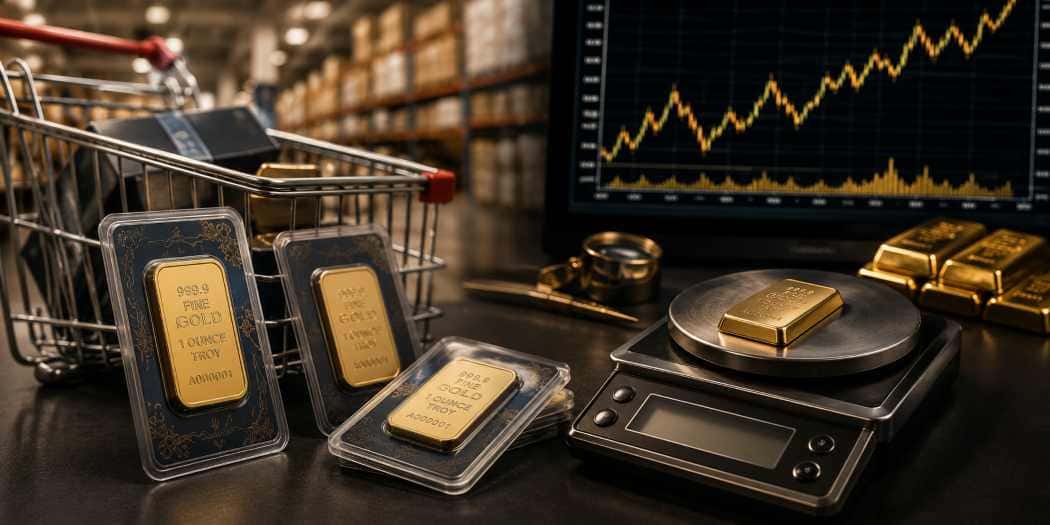
Costco Made Gold Easy to Buy. Selling It Is a Different Decision
Costco did something unusual to the bullion market: it put investment-grade gold in front of millions of shoppers who might never have visited a coin shop or precious-metals dealer. Bars from names such as PAMP Suisse, Rand Refinery, and the Royal Canadian Mint have appeared alongside conventional merchandise, turning physical gold into an unexpectedly mainstream purchase.
The attraction is understandable. Costco has offered recognizable, high-purity bullion at competitive prices, with insured shipping on many online products and potential membership or credit-card rewards for eligible buyers.
But gold has an ownership cycle that ordinary retail merchandise does not. Eventually, some buyers will want to convert their bullion back into cash. At that point, the Costco name matters far less than the bar itself. The central question becomes not where the gold was bought, but what it is, what the market is paying for it, and who can provide a competitive, secure exit.
'Costco Gold' Is Really Recognized Investment Bullion
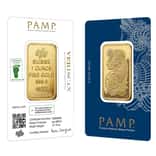
'Costco gold' is not a separate brand or class of bullion. It is a convenient label for products Costco sells but established refiners and mints manufacture. Recent offerings have included .9999-fine Royal Canadian Mint bars and 999.9-fine Rand Refinery bars, among other recognized products.
That distinction becomes important at resale. A dealer evaluating a PAMP, Rand Refinery, or Royal Canadian Mint bar is evaluating recognized bullion, not a Costco collectible. Gold content, manufacturer, authenticity, condition, packaging, and current wholesale demand matter more than the retailer on the original receipt.
Costco's model can offer real advantages on the way in. Pricing may be attractive relative to the prevailing gold market, while eligible Executive members or Costco credit-card holders may qualify for rewards under applicable terms. Still, shoppers should compare the purchase price with the live gold spot price and competing dealer premiums rather than assuming Costco automatically offers the lowest net cost. Precious metals are also generally listed by Costco as non-refundable and ineligible for price adjustments, making an eventual resale plan more important than it is with ordinary merchandise.
Your Costco Receipt Does Not Set the Resale Price
When it is time to sell, the market effectively starts over. The original retail price does not establish today's value, and rewards earned at purchase do not increase a dealer's bid.
Spot provides the benchmark, but it is not automatically the amount a seller receives. Dealers price purchases according to the metal's market value as well as product liquidity, verification costs, inventory needs, volatility, and resale demand. A widely recognized one-ounce bar is generally straightforward for a professional bullion buyer to identify and trade, yet bids can still differ between dealers and may be below spot.
Two investors holding identical one-ounce bars can receive essentially the same resale offer even if one originally paid considerably more. Costco rewards may reduce an eligible buyer's effective acquisition cost, but they do not change what the bullion itself is worth to the next buyer.
Owners should generally preserve sealed assay packaging when practical. It protects presentation and keeps identifying information and serial numbers together, although a professional buyer may still perform independent authentication. Keeping the original receipt is useful for records and potential tax-basis documentation, even though the receipt itself does not make the bar more valuable.
Can You Arbitrage Costco Gold?
Costco's bullion program has attracted attention for another reason: under certain market conditions, the combination of competitive pricing and eligible membership or credit-card rewards can reduce a buyer's effective acquisition cost enough to approach—or occasionally fall below—the price available from a bullion dealer buying the same bar. That creates the possibility of arbitrage, broadly meaning buying an asset in one market at a lower price and selling it into another at a higher price.
The calculation is more complicated than simply comparing Costco's listed price with the gold spot price. A buyer must consider the actual purchase price, rewards for which they genuinely qualify, applicable taxes or other costs, and the price a dealer is willing to pay at the time of resale. For example, a bar purchased above spot could still have an effective cost near spot after qualifying rewards. If a bullion dealer is simultaneously bidding at or above that effective cost, a resale may produce a small positive spread.
That opportunity should not be mistaken for guaranteed profit. Gold can move between purchase and resale, dealer bids change with market conditions and inventory needs, and Costco's reward programs are subject to eligibility requirements, terms, and limits. Shipping, insurance, payment timing, taxes, and other transaction costs can further reduce or eliminate the spread. Costco also limits precious-metal purchases, which restricts the ability to scale such a strategy.
For most buyers, the more useful lesson is not that Costco gold offers a dependable arbitrage trade, but that effective acquisition cost matters when evaluating bullion. Rewards can improve the economics of a purchase, while access to a competitive secondary market can make recognized bars easier to convert back into cash. Comparing both sides of the transaction before buying provides a much clearer picture of whether a Costco gold purchase represents good value.
Where to Sell Costco Gold
For most owners, the practical choices are an established bullion dealer, a reputable local precious-metals or coin shop, or a private buyer. The best option is not necessarily the one displaying the highest headline number. Security, payment terms, authentication, shipping, insurance, fees, and confidence in the counterparty all affect the real result.
A national bullion dealer has an important advantage: standardized investment products are its everyday business. Bullion Exchanges, for example, maintains a Sell to Us program for gold bars and other precious metals, allowing sellers to lock a quoted price and either ship qualifying items or transact through its New York City location. When comparing dealers, sellers should focus on expected net proceeds after applicable fees, shipping, and insurance rather than an isolated advertised bid.
Local coin and bullion shops can offer immediate, in-person examination without shipping. Bids can vary with inventory and customer demand, making comparison worthwhile.
Private sales can sometimes produce a higher gross price by eliminating the dealer spread, but they transfer authentication, payment, fraud, personal safety, and delivery risks to the individuals. With a gold bar worth thousands of dollars, a slightly better theoretical price may not compensate for a substantially less secure transaction.
A Better Gold Sale Starts With Better Comparison
The cleanest way to compare offers is to request bids for the same product within a short period. Because gold prices move throughout the trading day, quotes received hours apart may reflect different markets. Note the prevailing spot price, ask what the buyer will actually pay for your specific bar, and confirm any deductions before committing.
Do not confuse a dealer's retail asking price with its buyback bid. Seeing an identical one-ounce gold bar offered above spot does not mean a dealer can pay the same amount for incoming inventory. The spread helps account for authentication, market risk, operating costs, inventory carrying costs, and resale margin.
Preserve assay packaging when possible, photograph the bar and serial number, retain purchase records, and follow the buyer's shipping instructions. Use a secure, trackable method with adequate insurance rather than treating shipping as the place to economize.
Sellers should also remember that a profitable bullion sale can have tax consequences. The IRS treats gold bullion as a collectible for federal capital-gains purposes, with special rules potentially applying to long-term gains. Actual liability depends on individual circumstances, making accurate records important.
The Exit Strategy Belongs in the Buying Decision
Costco's success with bullion demonstrates how straightforward physical gold can be to own when the product is recognizable and the buyer understands both sides of the transaction.
Before buying, compare Costco's price with the current gold market, account only for rewards for which you qualify, and consider the premium above spot. Looking at what established dealers are paying for comparable products can be equally revealing. The gap between acquisition cost and likely resale value says more about the economics of a purchase than the retail price alone.
When selling, avoid anchoring on what you originally paid. Get current bids for the exact product, compare net proceeds, and weigh convenience against shipping and counterparty risk. Recognizable bullion from established refiners fits naturally into the professional secondary market.
Costco has introduced physical gold to a broader retail audience, and that accessibility is a genuine benefit. But a strong bullion purchase is not simply one that feels easy at checkout. Buy recognizable gold at a sensible total cost, preserve the records and packaging that support ownership, and know where competitive buyers can be found. The best time to think about selling Costco gold is before you buy it.