View Charts

Gold Hits Lowest Price Since 2025 as Silver Sinks Below $45
 0
Gold and Silver Reach New Lows in November Selloff
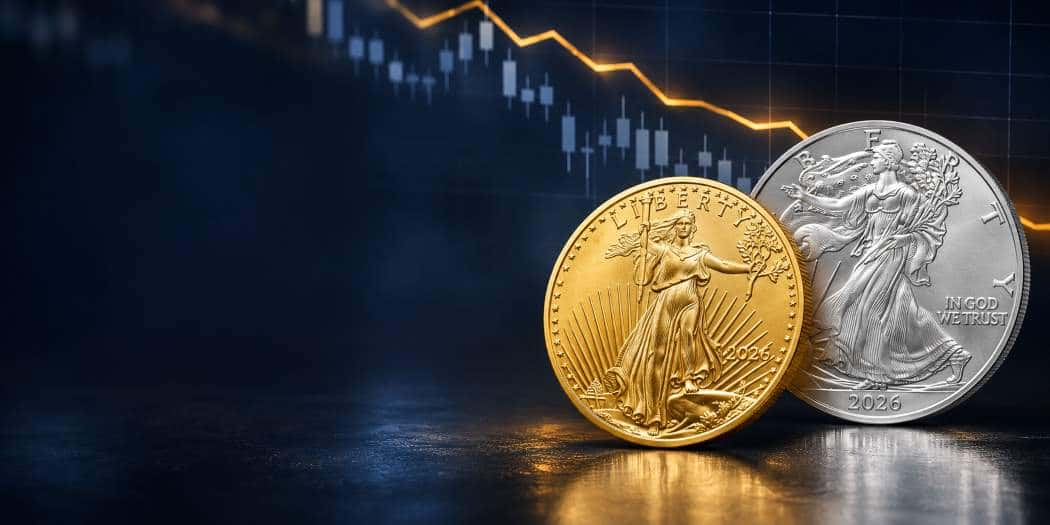
Gold and silver extended their sharp decline on November 18, 2026, with gold falling to its lowest level since September 2025 and silver briefly slipping below $45 per troy ounce. Platinum and palladium also moved lower, reflecting widespread selling across precious metals as investors reassessed the outlook for U.S. interest rates.
Gold fell below $3,750 during Wednesday's session, while silver suffered an even steeper percentage decline, losing more than 4% at one stage. Both metals moved beneath their previous 2026 lows, extending a correction that has erased substantial gains accumulated earlier in the year.
The weakness is particularly notable because geopolitical tensions remain elevated, a backdrop that might ordinarily encourage defensive demand for gold. Instead, expectations of additional Federal Reserve interest-rate increases, a stronger U.S. dollar, and elevated Treasury yields are dominating trading. The question now is whether the latest breakdown signals further losses or an approaching turning point.
Gold Price Falls to Its Lowest Level in More Than a Year
Gold's decline has carried the metal into price territory not seen since September 2025, extending its retreat from record highs reached earlier this year. Breaking below the lows established during preceding sessions has weakened the argument that the market had already found a durable floor.
According to Reuters' November 18 market report, a stronger dollar and increasingly restrictive Federal Reserve expectations have driven the latest losses. Gold's retreat has been particularly significant because the metal entered 2026 following a powerful advance fueled by investment demand, central-bank buying, and geopolitical uncertainty.
The reversal has exposed how quickly sentiment can change when expectations for monetary policy shift. Investors who previously anticipated lower borrowing costs are now confronting the possibility of additional tightening, altering the relative appeal of assets that do not generate interest income.
Gold showed signs of stabilization earlier in the week, but the recovery failed to gain momentum. Technical factors may now be amplifying the decline, as prices breaking below established support levels can trigger automated selling and position reductions. These reactions can accelerate short-term losses without necessarily establishing where the market will find lasting support.
For readers monitoring the live gold spot price, the distinction between a temporary rebound and a sustained recovery remains important. More consistent buying interest would be needed to challenge the recent downward trend.
Silver Drops Below $45 as Selling Pressure Intensifies
Silver has experienced an even sharper reversal, briefly falling below $45 per ounce after trading above $47 during the previous session. The move pushed the metal to its lowest levels of 2026, erasing a short-lived recovery and highlighting its tendency toward larger percentage swings than gold.
Silver's dual role as an investment asset and industrial commodity contributes to this volatility. Demand from electronics, electrical equipment, solar technology, and other manufacturing applications influences prices alongside purchases of physical bullion and investment products. Changes in economic expectations can therefore affect silver through multiple channels.
However, Wednesday's decline does not necessarily indicate a sudden deterioration in physical silver demand. The broader weakness across precious metals suggests that financial conditions are exerting substantial influence. Investors facing a stronger dollar, higher expected interest rates, and weaker commodity sentiment may reduce exposure even when longer-term industrial consumption remains relatively resilient.
Silver's smaller market can amplify these adjustments, particularly when speculative positions are reduced rapidly. Buyers tracking the silver spot price should also remember that physical coins and bars carry premiums that may not move proportionally with the underlying metal.
Federal Reserve Rate Expectations Pressure Precious Metals
The primary force behind the selloff is the increasingly restrictive outlook for U.S. monetary policy. Recent comments from Federal Reserve officials have reinforced expectations that additional interest-rate increases may be necessary to control inflation, challenging earlier hopes that borrowing costs could begin moving lower.
New York Federal Reserve President John Williams indicated that another increase would likely be needed, while St. Louis Fed President Alberto Musalem suggested that several additional increases might be required. These remarks contributed to a pronounced shift in market expectations, with futures pricing indicating a high probability of another increase at the December policy meeting.
The policy debate was already evident in the Federal Reserve's October 28 statement. Although the central bank maintained its benchmark rate at 3.75%–4.00%, two policymakers dissented in favor of an immediate quarter-point increase. Their disagreement illustrated the growing concern that inflation remained too persistent to justify a less restrictive approach.
Higher interest rates create competition for precious metals because gold and silver generate no interest income. As Treasury yields rise, interest-bearing securities can become more attractive relative to bullion. Higher U.S. rates may also support the dollar, making dollar-denominated metals more expensive for international buyers.
These pressures have become particularly influential during November's decline. The dollar has recently traded near a 19-month high, adding another obstacle for precious metals even as geopolitical uncertainty continues to generate concerns about financial stability.
Why Safe-Haven Demand Has Not Stopped Gold's Decline
Gold's reputation as a safe-haven asset does not guarantee that its price will rise during every period of international uncertainty. Investors respond to several competing influences, and the relationship between geopolitical risk and monetary policy becomes particularly complicated when inflation remains elevated.
Geopolitical tensions can contribute to higher energy prices and persistent inflation, potentially reinforcing expectations of additional Federal Reserve tightening. Rising Treasury yields and a stronger U.S. dollar can subsequently reduce gold's appeal, even as international uncertainty encourages some investors to seek defensive assets. These competing forces help explain why traditional safe-haven demand has struggled to offset the current selling pressure.
The latest decline suggests that investors are placing greater weight on interest-rate expectations and immediate financial conditions than on geopolitical risks. Although uncertainty continues to support gold's longer-term investment appeal, it has not been sufficient to prevent prices from reaching new lows. A meaningful shift in monetary-policy expectations may therefore prove more influential in determining gold's near-term direction than geopolitical developments alone.
Platinum and Palladium Follow Gold and Silver Lower
The decline has extended beyond gold and silver, with platinum falling approximately 4% and palladium losing around 2% during Wednesday's morning trading. Their participation reinforces the breadth of the selloff, although both metals have distinct supply-and-demand characteristics.
Platinum and palladium derive substantial demand from industrial applications, particularly automotive emissions-control systems. Their prices respond to manufacturing activity, production conditions, substitution trends, and investment flows, making their market behavior different from that of gold.
Nevertheless, the simultaneous weakness across all four precious metals suggests that broader financial conditions are currently exerting considerable influence. Their individual market fundamentals remain important, but neither platinum nor palladium has been insulated from the latest wave of selling.
What Could Reverse the Gold and Silver Price Decline?
Attention now turns to the Federal Reserve's October meeting minutes, scheduled for release Wednesday afternoon according to the Federal Reserve's November calendar. Investors will examine policymakers' discussions of inflation, economic activity, and interest rates for evidence supporting or challenging expectations of additional tightening.
A more restrictive policy outlook could reinforce dollar strength and maintain pressure on precious metals. Conversely, signs of disagreement among policymakers or greater concern about economic weakness could moderate those expectations. The reaction in Treasury yields and the dollar may ultimately prove as important as the minutes themselves.
Even a favorable market response would not automatically establish a lasting recovery. Gold and silver would need to demonstrate sustained buying interest after a correction of this magnitude, particularly if investors continue favoring interest-bearing assets.
For physical bullion buyers, lower spot prices also require consideration of total acquisition costs. Product premiums, availability, payment terms, and potential resale spreads remain relevant regardless of the underlying market direction.
Wednesday's breakdown has established new 2026 lows for gold and silver, with platinum and palladium following the broader decline. Whether prices stabilize or extend their losses will depend heavily on monetary-policy expectations and the response of currency and bond markets. Until those pressures ease, precious metals remain vulnerable to further volatility despite the substantial correction already recorded.