View Charts
Why Geopolitical Shifts and Oil Prices Influence Precious Metals
 0
0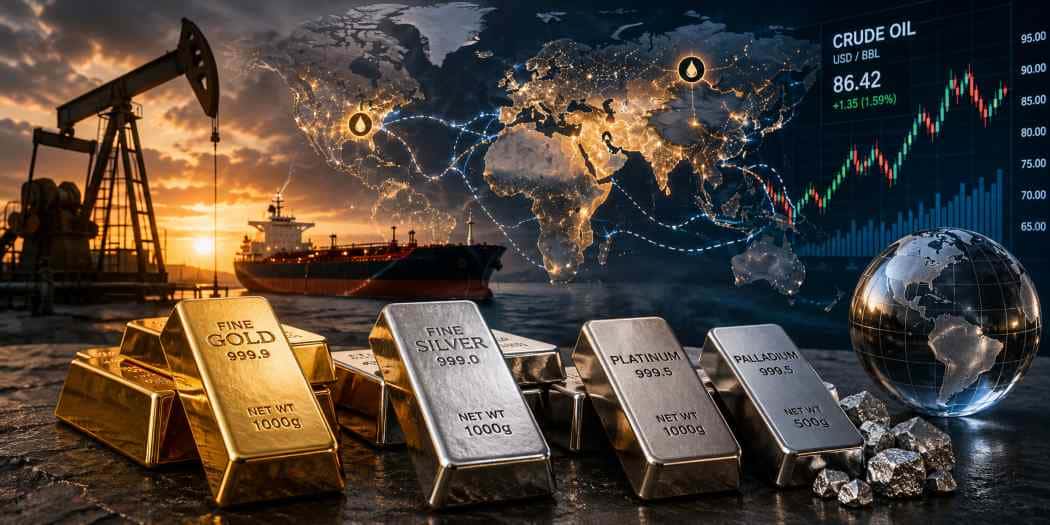
Why Energy Markets Matter More Than Many Gold Investors Realize
Gold is often one of the first assets investors watch when geopolitical tensions escalate. Whether the catalyst is conflict in the Middle East, sanctions against major energy producers, attacks on critical shipping routes, or renewed friction between global powers, the assumption is usually the same: uncertainty rises, and so does gold.
Reality is more nuanced. While geopolitical events can increase demand for traditional safe-haven assets, the strongest market reactions often occur when those events threaten global energy supplies rather than simply dominate headlines. Oil occupies a unique position within the global economy because it influences transportation, manufacturing, food production, and nearly every major industry. When geopolitical developments disrupt energy markets, the effects quickly spread beyond crude prices, shaping inflation expectations, interest rate forecasts, and investor sentiment—all of which influence precious metals.
Understanding that relationship helps explain why gold sometimes rallies sharply during international crises while, at other times, it struggles despite growing geopolitical uncertainty. The difference often lies not in the event itself but in how financial markets believe it will affect the broader economy.
Oil Prices Influence Gold Through More Than Inflation
When crude oil prices rise, the immediate concern is usually higher gasoline prices. For financial markets, however, the implications extend much further. Sustained increases in energy costs can push inflation higher by raising expenses throughout the supply chain, from manufacturing and freight transportation to agriculture and consumer goods.
Higher inflation often leads investors to reassess the path of monetary policy. If markets believe inflation will remain elevated, expectations for Federal Reserve interest rates may shift accordingly. Treasury yields frequently rise as investors anticipate tighter monetary policy, while the U.S. dollar may strengthen alongside those expectations.
That sequence creates one of the most important relationships in precious metals investing. Gold has historically served as a hedge against inflation, yet it also competes with interest-bearing assets. When Treasury yields climb rapidly, the opportunity cost of holding a non-yielding asset like gold increases, sometimes offsetting safe-haven demand generated by geopolitical uncertainty.
This dynamic explains why gold does not always move in the direction many investors expect. A geopolitical event may initially lift bullion prices, but if the same event pushes oil significantly higher and causes markets to anticipate more restrictive monetary policy, rising yields can eventually become the dominant force. Rather than responding to a single headline, gold reflects the balance between competing economic influences.
Why Some Geopolitical Crises Move Precious Metals More Than Others
Not every geopolitical event produces the same market response. Investors evaluate whether a conflict is likely to remain localized or expand into something capable of disrupting trade, commodity production, or global financial conditions.
Conflicts involving major energy-producing regions often receive greater attention because they carry the potential to interrupt oil production or threaten key shipping corridors. The Strait of Hormuz, for example, handles a significant share of the world's seaborne crude oil exports, while the Red Sea and Suez Canal remain essential routes for global commerce. Even the possibility of disruptions in these areas can cause oil markets to react long before any actual supply shortage develops.
Markets also distinguish between temporary shocks and structural risks. A brief geopolitical flare-up may trigger short-lived volatility across commodities, currencies, and equities without altering long-term expectations. Prolonged conflicts, broad economic sanctions, or sustained restrictions on energy exports, however, can reshape inflation forecasts and investor positioning for months rather than days.
That distinction helps explain why some international crises produce only modest moves in precious metals while others generate sustained rallies. Gold rarely responds to headlines alone. It responds to how those headlines change expectations for inflation, monetary policy, economic growth, and financial stability.
Silver, Platinum, and Palladium Don't Always Follow Gold
Although gold receives most of the attention during geopolitical crises, the broader precious metals market often tells a more nuanced story. Silver, platinum, and palladium each respond to many of the same macroeconomic forces as gold, but their larger industrial roles create additional drivers that can either reinforce or offset safe-haven demand.
Silver occupies a unique position because it serves as both a monetary and industrial metal. During periods of heightened uncertainty, it often benefits from the same investment demand that supports gold. At the same time, silver is widely used in electronics, solar technology, medical equipment, and other industrial applications. If geopolitical tensions threaten global economic growth, concerns about slowing manufacturing can temper silver's gains even when investors are buying precious metals for protection.
Platinum and palladium are even more closely tied to industrial activity, particularly the automotive sector, where they are used in catalytic converters to reduce vehicle emissions. Their prices are influenced not only by investor sentiment but also by automobile production, emissions regulations, technological change, and mine supply. South Africa dominates global platinum production, while Russia remains one of the world's largest palladium producers, making both metals especially sensitive to labor disruptions, sanctions, export restrictions, and broader geopolitical developments.
Energy prices can also affect these metals differently than gold. Rising oil prices increase production and transportation costs for mining companies while simultaneously influencing manufacturing demand. If higher energy costs begin slowing economic activity, platinum and palladium may face pressure despite elevated geopolitical risks. As a result, precious metals often diverge rather than move as a single group, reflecting the distinct markets each serves.
Looking Beyond the Headlines
Geopolitical events will almost certainly remain an important influence on financial markets, but successful precious metals investors understand that headlines are only the starting point. The more important question is whether an event changes the economic outlook in a meaningful way.
When tensions threaten energy supplies or major shipping routes, oil prices often become the first market to react. From there, investors watch whether higher energy costs begin affecting inflation expectations, Treasury yields, central bank policy, or the U.S. dollar. Those interconnected markets frequently provide a clearer explanation for precious metals price movements than the geopolitical event itself.
This broader perspective also helps explain why gold sometimes rallies during periods of uncertainty while, at other times, it remains flat or even declines despite worsening global conditions. Markets continually weigh competing forces, including safe-haven demand, inflation expectations, interest rates, currency movements, and prospects for economic growth. No single factor consistently determines the direction of precious metals.
For investors, following crude oil alongside Treasury yields, Federal Reserve expectations, and the U.S. dollar can provide a more complete framework for interpreting market behavior. Understanding those relationships doesn't eliminate uncertainty, but it offers a clearer perspective on why precious metals respond the way they do—and why the most significant price moves often begin well before the broader headlines tell the full story.
Related reading you may find interesting:
COMEX's First 24/7 Gold Trading Weekend: A New Era for Precious Metals
Platinum Supply Deficit: Why the Market Remains Structurally Tight