View Charts
Farewell to the Penny: The End of America’s Iconic One-Cent Coin
 0
0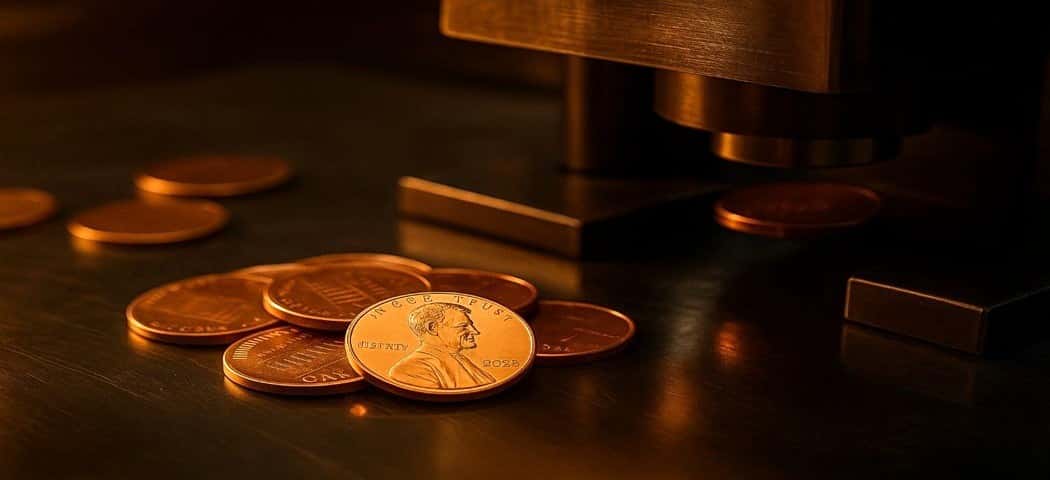
A Historic Final Strike at the Philadelphia Mint
On November 12, 2025, the United States Mint closed a 232-year chapter of American coinage history with the ceremonial strike of the final circulating one-cent coin at its Philadelphia facility. The event, attended by U.S. Treasurer Brandon Beach, marked the end of an era that began with the Coinage Act of 1792, which authorized the nation’s first penny.
For generations, the penny has been a symbol of everyday commerce — the sound of small change that filled jars, pockets, and store registers. But the economic reality of the 21st century finally caught up with tradition: the cost of producing each penny had risen to 3.69 cents, making continued circulation unsustainable.
Why the U.S. Mint Ended Penny Production
The Treasury’s decision to suspend circulating penny production stems from a combination of rising costs, supply inefficiencies, and evolving consumer habits. According to Mint data, the penny represented 57% of all coins struck in fiscal 2024, consuming vast production resources while declining in usefulness.
Digital payments and cash-rounding policies have reduced penny circulation demand, while the global cost of copper and zinc pushed minting expenses far beyond the coin’s face value. Ending production is expected to save the U.S. government roughly $56 million annually, freeing capacity for higher-denomination coins that remain necessary for commerce.
The penny remains legal tender, and with an estimated 300 billion coins already in circulation, there will be no shortage in daily transactions for years to come.
A Symbol of Change: From Copper to Code
Beyond economics, the end of the penny represents a broader transition in how America interacts with money. Just as the nation once moved from silver dimes to clad coinage, we are now witnessing the gradual digitization of currency.
For collectors, this shift highlights the historic continuity of U.S. coinage — each retirement of a denomination or metal composition signals the close of one era and the birth of another. The original 1793 “Flowing Hair” cent symbolized a young nation’s liberty; today, its descendant fades quietly into history, replaced by digital payment systems and contactless transactions.
The Collector’s Perspective: Preserving History in Copper and Zinc
Although production of circulating pennies has ended, the U.S. Mint will continue to issue numismatic editions in limited quantities for collectors. These commemorative strikes will ensure that Lincoln’s familiar profile endures, not in cash registers, but in curated collections that celebrate the artistry and legacy of American coinage.
For numismatists, this development mirrors the collectible boom that followed other key discontinuations — such as the Buffalo nickel in 1938 or the Silver Dollar in 1935. Early-dated Lincoln cents, error varieties, and even uncirculated rolls from the final year of mintage (2025) could attract new interest as tangible pieces of a transitional moment in U.S. monetary history.
Economic Lessons from the End of the Penny
The penny’s retirement also underscores a fundamental truth about modern minting economics: when production costs exceed face value, sustainability falters. This principle resonates across the precious metals market, where the spot price of silver, gold, copper, and zinc directly influences mint operations and coin design decisions.
Investors tracking metals, like the price of gold and silver, can view this event as a reminder that the physical composition of money — and its intrinsic value — still matters in a digital age. Even base metals, when shaped by history, carry a story of scarcity, cost, and cultural meaning.
Bullion Exchanges Insight: A New Era for Penny Collecting
With the conclusion of circulating penny production, a new chapter in U.S. coin collecting is already unfolding. History shows that when a denomination ends, public interest surges — and the humble Lincoln cent is no exception. Collectors and new hobbyists alike are expected to seek out historic designs such as the Lincoln Wheat Penny (1909–1958) and the Lincoln Memorial Cent (1959–2008), along with final-year 2025 issues that mark the official close of the penny’s 232-year run.
This heightened attention could spark fresh demand for both circulated and high-grade examples, particularly early Wheat Pennies, key-date varieties like the 1909-S VDB and 1955 Doubled Die, and transitional issues such as the 1982 copper-zinc changeover. As numismatic value rises, so too does the cultural appreciation for what the penny has represented in everyday American life — perseverance, accessibility, and connection to history.
As the nation retires its smallest coin, the penny’s story is far from over — it’s simply moving from change jars into cherished collections, where its legacy will shine brighter than ever. For collectors inspired by this historic milestone, Bullion Exchanges remains a trusted destination for authentic U.S. coins and expert guidance on the evolving numismatic market. The end of the penny reminds us that even the smallest denomination can hold immense historical and emotional worth — a truth collectors have understood all along.
A Copper Legacy That Endures
The ceremonial striking of the final U.S. penny closes one of the longest-running chapters in American minting history — yet the coin’s legacy endures. From the early large cents of 1793 to the enduring image of Lincoln introduced in 1909, the penny reflects America’s evolving identity — a symbol of both humility and endurance.
Though no longer rolling off presses, it will remain a touchstone of American culture, linking the tactile past to a digital future. In every collection, jar, or display case, the humble cent continues to tell the story of a nation learning, once again, to measure value in more than metal alone.
Related reading you may find interesting:
2025 Omega Pennies: A Historic Final Chapter for the Penny
U.S. Penny Discontinued: Top 25 Pennies Worth Finding
The Top 100 Most Valuable Wheat Pennies: Unlocking History, Rarity, and Value