View Charts
eBay Now Authenticates Collectible Coins: What Buyers Should Know
 0
0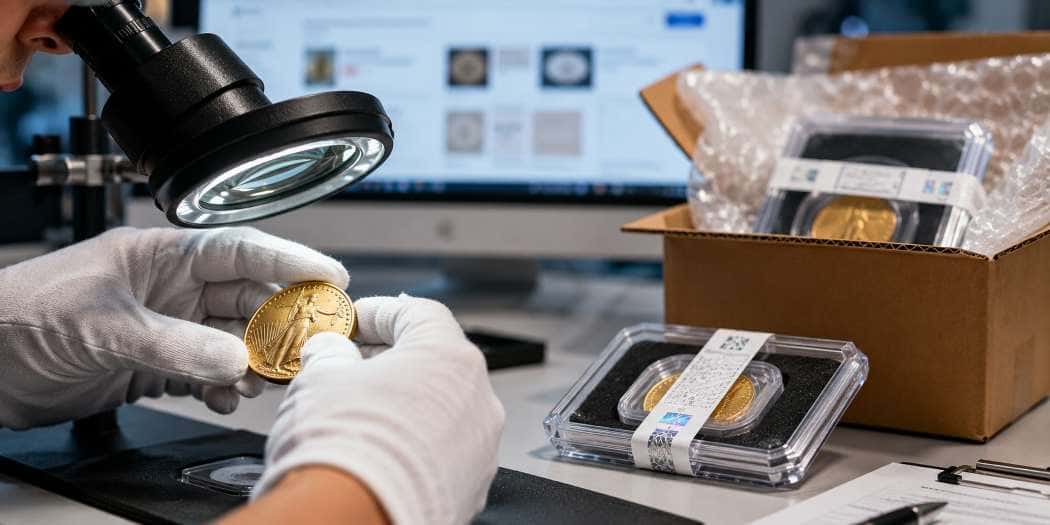
A New Step Between the Seller and the Buyer
Buying certain higher-value collectible coins on eBay changed on August 18, 2026. The marketplace expanded its Authenticity Guarantee program to qualifying single coins priced at $500 or more, adding an independent verification step before eligible purchases reach customers. Instead of shipping directly to the buyer, the seller sends the coin to eBay's third-party authentication partner. Once approved, it is repackaged and forwarded to the customer using tracked delivery. eBay currently charges buyers and sellers no additional fee for the authentication service itself.
For collectors, the appeal is straightforward. Buying an expensive coin from an unfamiliar marketplace seller can raise questions about authenticity, altered holders and whether the item actually matches its listing. Independent inspection provides another safeguard, but it also creates a longer chain of custody than purchasing directly from a dealer that sources, verifies and fulfills its own inventory.
Which Coins Are Actually Included?
Despite the $500 headline, eBay's new authentication requirement applies to a relatively narrow portion of the coin market. Qualifying purchases include certain single raw U.S. coins and single graded U.S. and World coins priced at $500 or more. Eligible listings display eBay's blue Authenticity Guarantee badge, which is a better guide for buyers than price alone.
Raw coins are checked for authenticity and compared with the listing, while eligible certified coins are examined along with their holders and labels for authenticity and signs of tampering. The service does not grade or re-grade coins.
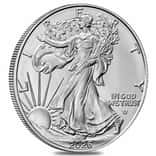
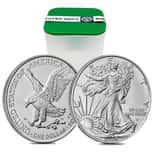
Importantly for precious metals buyers, coins listed in eBay's bullion category are currently excluded, as are coin sets, rolls, bags, bulk lots, medals and tokens. An American Silver Eagle roll, for example, would fall outside the qualifying single-coin category. Precious metal rounds and bullion bars also fall outside the qualifying single-coin categories. That means the program is primarily relevant to individual collectible and numismatic coins, not ordinary bullion purchases.
How Does Authentication Affect Delivery and Cost?
The biggest practical difference is an additional stop between seller and customer. A direct purchase can travel from seller to buyer, while an eligible eBay transaction instead follows this route:
Seller → Authentication Facility → Buyer
eBay says authentication generally takes one to two business days after the coin reaches the facility. Once approved, it is sent to the buyer with tracked delivery of four days or less. That timeline does not include the seller's original shipment to the authenticator, so buyers should not mistake the one-to-two-day inspection period for the entire fulfillment process.
eBay currently describes the authentication service itself as carrying no additional fee for buyers or sellers, and shipment from the authentication facility to the buyer is handled at no additional cost to the seller. That does not make the transaction cost-free, however. The seller remains responsible for safely shipping the coin to the authentication facility, including appropriate insurance. For a coin worth $500, $1,000 or considerably more, insured fulfillment represents a real expense even when eBay does not separately invoice the seller for authentication.
Those costs ultimately matter to buyers. A seller has to account for shipping, insurance, handling and the broader costs of selling through a marketplace when deciding what price makes economic sense. There may be no line item labeled “authentication fee,” but it would be unrealistic to assume that the additional fulfillment requirements have no economic effect. To the extent they increase a seller's cost of completing a transaction, some or all of that expense can ultimately be reflected in the price buyers are asked to pay.
Returns can add another handling stage because eligible returned coins generally pass through authentication again before being released to the seller. The trade-off is therefore broader than a one-to-two-day inspection: additional verification brings additional handling, fulfillment complexity and costs that may ultimately be incorporated into marketplace pricing.
What Buyers Gain From the Extra Step
eBay is addressing a challenge inherent to large marketplaces. Thousands of independent sellers can provide enormous selection, particularly for collectors searching for specific dates, grades or varieties, but buyers may know relatively little about the person or business behind an individual listing.
Authenticity Guarantee places another checkpoint in the transaction. If an eligible coin cannot be authenticated or differs materially from its listing, it is returned to the seller and the buyer receives a refund. That can provide valuable reassurance when purchasing an expensive raw or certified coin from an unfamiliar source.
Where Are the Limits of eBay's Authenticity Guarantee?
Authenticity Guarantee adds another safeguard for qualifying purchases, but buyers should not interpret it as authentication of every coin offered on eBay. Products outside the eligible categories and price requirements do not receive the additional inspection, making the blue Authenticity Guarantee badge an important distinction when evaluating a listing.
The $500 threshold creates one obvious boundary. An otherwise eligible fixed-price coin offered and sold below $500 generally falls outside the program, while an auction that begins below the threshold can still qualify if the final sale price reaches $500. eBay also says an eligible Buy It Now listing priced at $500 or more remains covered if the seller accepts a Best Offer below that amount. In other words, simply discounting an already qualifying $500 listing does not provide a way around authentication.
Category selection creates another potential concern because coins listed in eBay's bullion category are currently excluded. That does not mean sellers are free to misclassify collectible coins as bullion to avoid authentication. eBay requires sellers to use appropriate categories, warns that miscategorized coins may lose Authenticity Guarantee eligibility and says it may move listings when the selected category does not match the item.
Most importantly, a coin being outside Authenticity Guarantee does not exempt it from eBay's other marketplace rules. Counterfeit and unauthorized replica coins remain prohibited. Buyers should therefore view Authenticity Guarantee as an additional layer of verification for eligible transactions, not a substitute for evaluating the seller and source of coins that fall outside the program.
Why Buying Direct From a Reputable Dealer Is Simpler
The new process highlights a fundamental difference between a marketplace and an established precious metals dealer such as Bullion Exchanges. eBay connects customers with many independent sellers, so qualifying transactions may benefit from a separate authentication intermediary. Bullion Exchanges follows a more direct model: it sources and verifies its inventory and guarantees the authenticity of the products it sells, then fulfills customer orders directly. Buyers therefore receive the assurance of authenticity without requiring a marketplace-mandated third-party authentication stop before delivery.
For commonly available bullion and collectible coins, buying directly from a reputable dealer can mean a shorter chain of custody, fewer handling stages and a more direct customer-service relationship. The buyer is purchasing from the same company that verifies the product, holds the inventory and fulfills the order, rather than completing a transaction that involves an independent marketplace seller followed by a separate authentication facility.
Price deserves consideration as well. Marketplace buyers should compare the complete cost of an eBay purchase with pricing available directly from established precious metals dealers rather than assuming a marketplace listing represents the best value. For a readily available product, direct purchasing can combine competitive pricing, simpler fulfillment and confidence that the product has already been authenticated by the dealer selling it.
eBay still has an important advantage for collectors seeking scarce dates, unusual varieties or specific grades that may be difficult to find elsewhere. In those circumstances, the marketplace's broad selection and additional authentication may outweigh the inconvenience. For common bullion and widely available coins, however, purchasing directly from a reputable dealer such as Bullion Exchanges can provide the same essential assurance of authenticity without adding another intermediary, additional handling or the corresponding authentication delay.
Will Authentication Hurt eBay's Coin Business?
It is too early to know. Authentication could strengthen eBay's position among collectors who previously hesitated to make expensive purchases from unfamiliar sellers. eBay reported that searches for collectible coins increased more than 30% between June 2025 and June 2026, while listings of historic coins rose more than 40%, so increasing confidence in higher-value transactions has an obvious appeal.
The question is whether customers will accept the additional fulfillment steps when comparable inventory is readily available elsewhere. For a scarce numismatic coin, greater selection may easily justify the authentication process. For commonly available products, some buyers may favor the simplicity of purchasing directly from an established dealer.
The effect on ordinary bullion is much smaller than the $500 headline might initially imply. Bullion-category products, precious metal rounds, coin rolls and bulk lots are not being routed through the new coin-authentication program under current rules. If eBay eventually expands the program into bullion, the impact on precious metals transactions could become considerably larger.
For now, eBay is offering qualifying collectible-coin buyers an additional layer of protection in exchange for a less direct transaction. That added assurance may be worthwhile for an unusual marketplace find. But when the same or comparable product is available from Bullion Exchanges, buying directly provides a simpler route: fewer handoffs, direct fulfillment and confidence in the precious metals dealer selling the product.