View Charts
The Definitive 1909–1958 Lincoln Wheat Cent Guide for Modern Collectors
 0
0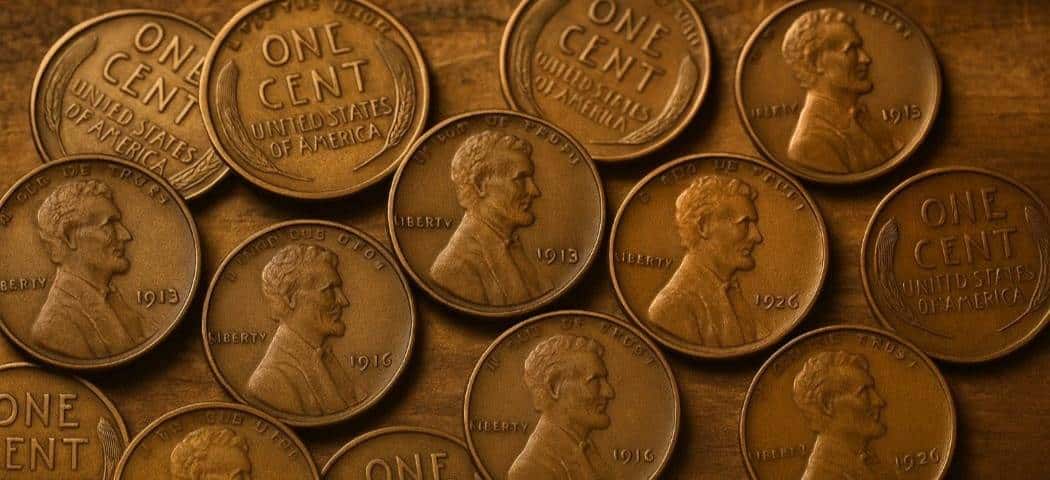
The Enduring Appeal of the Lincoln Wheat Penny
Few American coins have inspired such lasting admiration as the Lincoln Wheat Cent, also known as the Lincoln Wheat Penny. Minted from 1909 to 1958, it represents both artistry and history — a perfect fusion of design, patriotism, and collectibility. Introduced to commemorate Abraham Lincoln’s 100th birthday, the Wheat Cent marked the first time a real person appeared on U.S. coinage.
More than a century later, these coins remain a favorite among new hobbyists and seasoned numismatists alike. The Lincoln Wheat Penny series offers affordability for entry-level collectors, while key dates and rare varieties continue to command significant premiums at auction. Whether viewed as nostalgic keepsakes or tangible investments, Wheat Cents endure as the cornerstone of U.S. coin collecting.
The Birth of the Lincoln Wheat Cent (1909)
The Lincoln Wheat Cent made its debut in 1909, replacing the long-running Indian Head Cent. Designed by sculptor Victor David Brenner, the obverse features a dignified portrait of President Abraham Lincoln, while the reverse displays two stylized wheat stalks encircling the denomination — a tribute to prosperity and America’s agrarian roots.
Originally struck in 95% copper and 5% tin and zinc, the coin’s design faced early controversy when Brenner’s initials “V.D.B.” appeared prominently on the reverse. Public criticism led to their temporary removal later that same year. This detail ultimately created one of the most famous rarities in U.S. numismatics — the 1909-S VDB.
A Half-Century of History: 1909–1958 Overview
Over its nearly 50-year run, the Lincoln Wheat Penny witnessed world wars, the Great Depression, and monumental social change. While the design remained largely consistent, subtle variations in composition, mintage, and mintmarks add depth to the series.
-
1909–1916: The early “Brenner years,” featuring the original portrait and design.
-
1917–1939: Wartime and economic-era coins with growing mintages but lower survival rates in high grade.
-
1940–1958: Later issues defined by metal experimentation and the transition to the Lincoln Memorial reverse in 1959.
The combination of historical context and mintage diversity gives each Wheat Cent its own story — one that continues to intrigue collectors today.
Key Dates and Varieties Every Collector Should Know
Early Rarities (1909–1919)
-
1909-S VDB: The iconic key date of the entire series, with a mintage of only 484,000. Even circulated examples fetch hundreds of dollars, while uncirculated pieces can exceed $2,000. A stunning MS67 RD example realized $168,000 at Stack’s Bowers (2022).
-
1909-S (no VDB): Often overlooked but still scarce, especially in higher grades. A MS66 example brought $69,000 at auction.
-
1914-D: Considered the second-rarest regular-issue Wheat Penny; genuine examples are often counterfeited, making authentication crucial. One MS65 RD coin sold for $158,625 in a major U.S. auction.
-
1917 Double Die Obverse: One of the earliest dramatic die-error varieties — easily visible with magnification. An uncirculated example realized $120,000.
Middle-Era Standouts (1920–1939)
-
1922 “No D” (Denver Mint): Created when mintmarks were accidentally polished away — an extremely valuable and famous variety. A MS64 Strong Reverse sold for $92,000.
-
1931-S: Low Depression-era mintage (866,000) makes this a semi-key coin with enduring demand. A MS66 RD example achieved $38,400.
-
1924-D, 1926-S, 1930-S: Underrated dates that show solid long-term appreciation in higher grades. The 1926-S MS65 RD record stands at $149,500.
Wartime and Post-War Highlights (1940–1958)
-
1943 Bronze Cent: Struck on leftover copper planchets during WWII; one of America’s most coveted coin errors, with single examples selling for six figures. A MS63 BN example sold for $372,000 (2025, Heritage Auctions).
-
1943 Steel Cent: Produced from zinc-coated steel to conserve copper — an interesting one-year type popular with beginners. The record sale reached $218,500 for a MS68 example.
-
1944 Steel Cent (Error): A rarity resulting from steel planchets mistakenly reused from 1943. A MS66 example sold for $408,000 (2021, Heritage Auctions).
-
1955 Double Die Obverse: A bold doubling of the date and motto makes this coin an instantly recognizable variety and a cornerstone of modern error collecting. A MS65 RD specimen realized $114,000 (2024, Stack’s Bowers).
Auction records and grade data compiled from PCGS Auction Prices, Stack’s Bowers Galleries, and Heritage Auctions public archives (2021–2025).
Hidden Gems: Overlooked Wheat Pennies with Potential
Beyond the legendary key dates, numerous Wheat Cents remain undervalued. Coins such as the 1910-S, 1915-S, and 1926-S offer excellent long-term upside, especially in high Mint State grades. Even common-date Wheat Pennies in brilliant “Red” condition (MS65 or higher) are gaining traction as collectors chase certified quality over rarity.
Another area of opportunity lies in toned Wheat Cents — beautifully patinated coins with natural rainbow hues that command growing premiums in today’s market.
Collecting the Lincoln Wheat Cent in the Modern Era
Building a complete Lincoln Wheat Penny collection can be approached in several rewarding ways:
-
By Date and Mintmark: A traditional and educational method that helps collectors understand U.S. Mint history and regional output patterns.
-
By Type or Variety: Ideal for specialists who enjoy studying design modifications, die varieties, doubled dies, or famous minting errors.
-
By Grade: Many collectors focus on obtaining the finest condition possible — especially in Mint State (MS) grades that retain full original luster and color.
Understanding Copper Color Designations: RD, RB, and BN
Because Lincoln Wheat Cents were struck primarily in bronze (95% copper), their surfaces naturally tone or darken over time. Professional grading services like PCGS, NGC, and CAC assign color designations to describe this toning, which significantly affects a coin’s appearance, rarity, and market value:
-
RD (Red):
Represents coins retaining at least 85–95% of their original bright copper luster. These coins exhibit vibrant, fiery orange-red surfaces similar to how they looked immediately after minting.
Value Impact: RD coins are the most sought-after and command the highest premiums, especially in high grades like MS65 or higher. True full-red Wheat Cents are scarce because copper oxidizes easily. -
RB (Red-Brown):
Coins displaying a blend of original red luster with 30–85% brown toning. This balanced coloration often gives a coin appealing character while remaining more affordable than full-red examples.
Value Impact: RB coins are moderately priced and provide excellent value for collectors seeking attractive coins without the full RD premium. -
BN (Brown):
Coins that have less than 30% of their original red color and display uniform chocolate or mahogany-brown toning from natural oxidation.
Value Impact: BN Wheat Cents are the most common and typically trade for lower premiums, though exceptionally smooth or glossy brown examples can still be highly collectible, especially for older key dates.
In short, color directly reflects both preservation and rarity. The longer a coin maintains its bright red surface, the more desirable and valuable it becomes.
Grading, Certification, and Preservation
Modern collectors should understand the importance of professional grading. Certification from reputable services like PCGS, NGC, or CAC ensures both authenticity and objective condition assessment, providing liquidity and confidence in resale or investment scenarios.
When handling Wheat Cents, always avoid cleaning and hold coins only by the edges to preserve natural color and luster. Store coins in temperature-controlled, acid-free holders (such as archival flips or encapsulated slabs) to minimize oxidation and maintain long-term surface stability.
Why the Lincoln Wheat Cent Still Matters
Even decades after its final issue in 1958, the Wheat Penny remains one of the most important entry points into numismatics. Its combination of historical context, affordability, and investment potential ensures continued relevance in the modern marketplace.
Collectors appreciate the Wheat Cent’s connection to American history, while investors value its steady performance compared to speculative modern issues. Rare varieties like the 1909-S VDB, 1914-D, and 1955 Double Die continue to outperform inflation, reaffirming the enduring demand for high-grade examples.
A Legacy Minted in Copper
From its humble beginnings in 1909 to its retirement in 1958, the Lincoln Wheat Cent represents far more than small change — it’s a tangible symbol of American resilience, artistry, and history. For collectors, it offers both nostalgia and opportunity. For investors, it remains a sound, time-tested store of value.
Whether you’re completing your first album or upgrading to certified Mint State examples, the Wheat Penny continues to inspire generations of collectors worldwide.
Key Takeaways
-
The Lincoln Wheat Cent (1909–1958) remains the cornerstone of U.S. coin collecting.
-
Key rarities include the 1909-S VDB, 1914-D, 1922 “No D”, 1943 Bronze Cent, and 1955 Double Die.
-
Condition and originality often outweigh mintage in determining value.
-
Certified and well-preserved Wheat Pennies continue to appreciate steadily.
-
Collectors can find lasting enjoyment and value in this historic copper series.
Leave a comment
RD (Red): 85–95% original bright copper color, highest value.
RB (Red-Brown): 30–85% red tone remaining, moderately priced.
BN (Brown): Mostly brown patina from oxidation, lower value but still collectible.
Maintaining original color dramatically increases a coin’s desirability and price.
1909-S VDB (first year, low mintage)
1914-D (rare Denver issue)
1922 No D (mintmark error)
1931-S (Depression-era scarcity)
1943 Bronze and 1955 Double Die Obverse (major errors)
High-grade examples of these coins are consistently in demand.