View Charts
China Manufacturing Expands: What It Means for Silver and PGMs
 0
0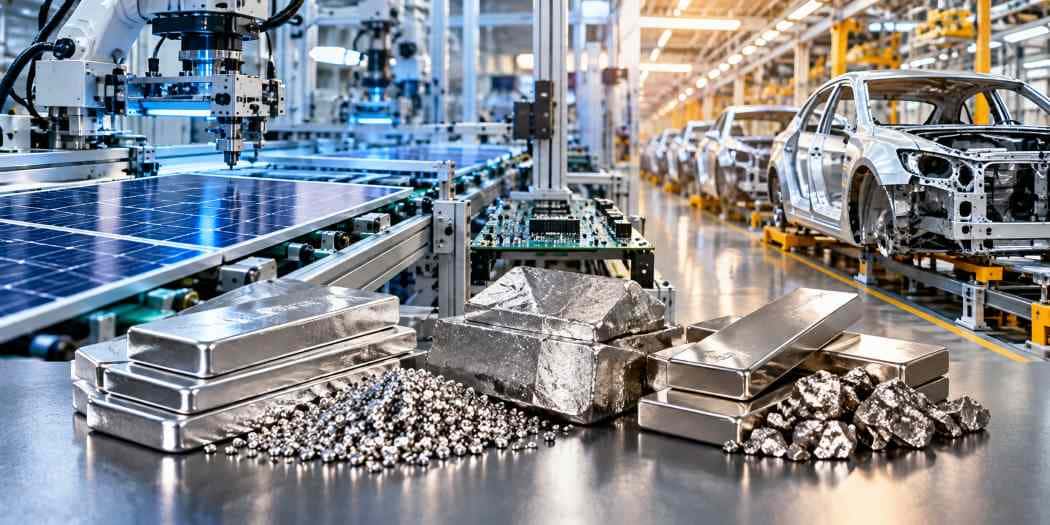
China’s PMI Turned Positive, but Metals Need More Than One Number
China’s official manufacturing purchasing managers’ index rose to 50.1 in September from 49.8 in August, moving back above the 50 line that separates contraction from expansion. Production strengthened, climbing to 51.7, while new orders held in expansion territory at 50.5. The National Bureau of Statistics also reported that 12 of the 21 manufacturing industries it tracks were above the expansion threshold, four more than in August.
For precious-metals investors, the question is not whether one PMI reading is bullish. It is whether improving Chinese factory activity changes the demand picture for silver, platinum and palladium, three metals that depend far more heavily on industrial consumption than gold. The answer is uneven. A healthier manufacturing backdrop helps, but each metal faces different structural forces that can amplify or blunt that benefit.
Why China Matters More to Silver and PGMs Than to Gold
China sits at the intersection of manufacturing, autos, electronics, solar equipment, chemicals, glass and infrastructure. A PMI reading above 50 does not measure metal demand directly, but it offers an early signal about production, orders and factory conditions that can eventually influence consumption of metals embedded in finished goods.
Gold responds primarily to monetary forces such as interest rates, the dollar, central-bank demand and safe-haven flows. Silver straddles both worlds. Investors buy it as bullion, but manufacturers use it in electrical contacts, electronics, vehicles, power infrastructure and photovoltaic cells. Platinum and palladium are even more exposed to industrial cycles, particularly automotive production and emissions systems. A recent examination of why silver and the PGMs were falling faster than gold highlighted that sensitivity; the September PMI now provides a fresh test of whether improving Chinese activity can strengthen the industrial side of the equation.
The composition of the PMI is encouraging but not uniformly strong. Large manufacturers remained in expansion at 50.6, while medium and small firms stayed below 50. For metals, a broad and persistent recovery in orders would matter more than a single headline reading.
Silver Gets the Broadest Industrial Read-Through
Silver has the clearest link to a broad manufacturing improvement because its industrial use spans many sectors. China’s high-tech manufacturing PMI reached 52.5 in September, while electronics, solar, power-grid and automotive industries all consume silver directly or indirectly. That makes the sector mix behind the headline especially relevant to fabrication demand.
Yet the 2026 silver story has an important complication. The Silver Institute’s World Silver Survey 2026 expects overall industrial fabrication to decline this year even as several technology-related uses remain strong. Photovoltaic manufacturers have been reducing the amount of silver used per cell and, in some cases, substituting other materials. The report notes that Chinese solar installations may decline this year and that silver loadings per cell are expected to fall further. Faster factory activity therefore does not automatically translate into proportionally higher silver consumption.
Other sectors could offset part of that pressure. Data centers, artificial-intelligence infrastructure, vehicles and electrical systems remain supportive areas. That makes China’s PMI useful as a direction-of-travel indicator rather than a direct forecast of ounces consumed. Investors watching the live silver price should treat stronger manufacturing as one demand-side input alongside investment flows, supply deficits, recycling and macroeconomic conditions.
Platinum’s China Story Is Improving in Some Places and Weakening in Others
Platinum’s connection to China is more complicated because demand is split among automotive catalysts, industrial applications, jewelry and investment. The World Platinum Investment Council expects global industrial platinum demand to rise 5% in 2026, while automotive demand is forecast to fall 4%.
Industrial uses can benefit from stronger manufacturing, particularly in chemicals, glass, electronics, hydrogen-related technologies and data-center infrastructure. WPIC has also highlighted China’s planned investment in artificial intelligence infrastructure as a potential source of new PGM demand. A stronger manufacturing PMI reinforces the idea that industrial activity is stabilizing after a softer period.
The automotive side is less straightforward. WPIC says China has contributed to weaker automotive platinum demand in 2026, while high prices and soft domestic consumption are also weighing on platinum jewelry demand. Better factory output may improve the operating environment, but it does not erase those pressures. For investors following the platinum spot price, September’s PMI is constructive evidence of improving industrial momentum, not proof that platinum demand has turned higher across every Chinese end market.
Palladium Needs the Right Kind of Manufacturing Growth
Palladium is even more dependent on what China produces, not simply how much. Its largest use remains catalytic converters for gasoline-powered vehicles, making the mix between internal-combustion vehicles, hybrids and battery-electric vehicles crucial. A broad manufacturing recovery can support auto production, but rising output helps palladium most when it translates into vehicles that still require palladium-bearing emissions-control systems.
Industry forecasts still point to weaker global palladium demand in 2026 as gasoline-car production declines. At the same time, hybrids can remain PGM-intensive because they still use combustion engines and catalytic converters. The demand outcome depends on drivetrain mix rather than the headline number of vehicles leaving factories.
The September improvement is therefore favorable for the general industrial environment, but palladium still needs confirmation from auto production, hybrid sales, gasoline-vehicle output and catalyst demand. The live palladium price can diverge from broader Chinese manufacturing data when the composition of growth works against the metal.
Better Chinese Data Does Not Override Global Macro Pressure
China’s manufacturing improvement arrives while precious metals are still being pulled by powerful macroeconomic forces outside China. U.S. Treasury yields remain unusually high, the Federal Reserve outlook is sensitive to inflation data, and the dollar continues to influence commodity pricing. Those forces can overwhelm incremental changes in expected industrial demand over short periods.
That helps explain why stronger Chinese data need not produce an immediate rally in silver, platinum or palladium. Spot and futures prices respond to interest rates, currencies, positioning, geopolitics and liquidity long before physical manufacturers adjust procurement. Industrial demand changes more slowly. The most useful interpretation of the PMI is that one important demand center has stopped deteriorating at the headline level.
The next few months will show whether that improvement is durable. Investors should watch whether new orders remain above 50, whether smaller manufacturers join the expansion, and whether stronger output appears in the industries that actually consume silver and PGMs. Sector data from autos, solar, electronics and heavy industry will provide stronger confirmation than the headline PMI alone.
The Signal to Watch Is Breadth, Not Just Expansion
September’s PMI crossing back above 50 matters because it removes one layer of concern from the industrial-demand outlook. It suggests that Chinese manufacturing entered the fourth quarter with better production momentum and a wider share of industries expanding than in August.
But the implications are not identical. Silver benefits from the broadest manufacturing exposure but faces continued thrifting in solar. Platinum has stronger industrial growth prospects but weaker automotive and jewelry demand in China. Palladium remains highly dependent on the powertrain mix inside the auto market. If China’s recovery broadens from large manufacturers into smaller firms and is confirmed by autos, electronics and investment spending, the demand signal becomes more persuasive. Until then, September’s PMI is best viewed as an improving foundation rather than a complete change in trend.