View Charts
Bullion Company Failures: Lessons Every Investor Should Know
 0
0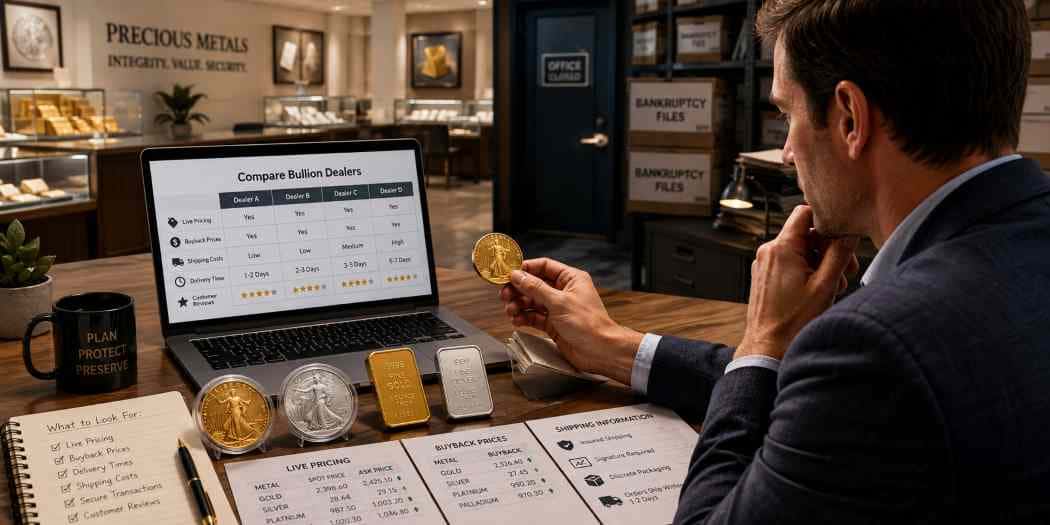
Why the Right Bullion Dealer Matters More Than Ever
When a bullion company fails, the damage extends far beyond its balance sheet. Customers can find themselves waiting months for deliveries, fighting to recover prepaid orders, or discovering that metals they believed were safely stored were never fully accounted for. Ironically, some of the industry's most significant collapses have occurred during periods of rising gold spot prices, when demand appeared strongest and confidence was high.
The precious metals business remains remarkably resilient, and the overwhelming majority of dealers, refiners, and depositories operate responsibly. Yet history shows that failures tend to follow familiar patterns. Some companies expanded faster than their finances allowed. Others became entangled in regulatory problems, poor inventory controls, or outright fraud. In nearly every case, warning signs appeared well before customers realized anything was wrong.
Looking back at these collapses is less about revisiting old headlines than understanding what they reveal. Each offers a lesson about transparency, liquidity, and the importance of knowing exactly who is handling your investment. Those lessons remain just as relevant for today's bullion buyers as they were when these companies first made the news.
Eight Company Collapses Every Bullion Investor Should Know
Rosland Capital
Rosland Capital's 2026 Chapter 11 bankruptcy surprised many investors because it occurred while gold was trading near record highs. Rather than benefiting from the rally, the company reportedly struggled with mounting liabilities, rising replacement costs, and cash-flow pressures tied to customer orders. The case demonstrated that strong precious-metals prices alone cannot overcome an unsustainable business model, particularly when inventory management and liquidity fall out of balance.
First State Depository and Argent Asset Group
Few cases shook investor confidence more than the collapse of First State Depository Company and its affiliated businesses. Federal investigators alleged that customer gold, silver, and rare coins held for safekeeping had been misappropriated over a period of years, ultimately resulting in criminal convictions and substantial financial losses. The case underscored an uncomfortable reality: storage arrangements deserve the same scrutiny as the bullion itself.
Republic Metals Corporation
For decades, Republic Metals Corporation ranked among America's largest precious-metals refiners, supplying investment products and industrial metals to customers around the world. Its 2018 bankruptcy stemmed from liquidity problems and accounting irregularities that ultimately proved impossible to overcome. The company's size and reputation offered little protection once financial confidence began to erode.
Lear Capital
Lear Capital spent years building national brand recognition through extensive advertising before entering Chapter 11 restructuring following mounting legal, regulatory, and financial challenges. While many customers successfully received their purchases over the years, the company's later difficulties illustrated how aggressive marketing alone should never be mistaken for financial strength.
Northwest Territorial Mint
Despite its official-sounding name, Northwest Territorial Mint was a privately owned manufacturer and bullion dealer rather than a government mint. After years of lawsuits, operational problems, and financial strain, the company entered bankruptcy in 2016, leaving many customers facing lengthy delays before outstanding orders were resolved.
The Tulving Company
Once considered a major online bullion dealer, The Tulving Company collapsed after accepting customer payments for metals that were never delivered. Delivery delays gradually lengthened before operations unraveled completely, highlighting one of the industry's most recognizable warning signs: promises that repeatedly outpace fulfillment.
Pure Gold Mining and Great Panther Mining
Mining companies face a different set of challenges than bullion dealers, but their failures offer valuable lessons about the precious-metals industry as a whole. Both Pure Gold Mining and Great Panther struggled with rising operating costs, disappointing production, and financing pressures that ultimately overwhelmed otherwise promising assets. Even when gold prices remain favorable, poor execution and excessive debt can prove fatal.
Bre-X Minerals
No discussion of precious-metals failures would be complete without Bre-X. The Canadian exploration company became one of history's most infamous mining scandals after claims of an enormous Indonesian gold discovery were revealed to be based on falsified drill samples. Although the events unfolded nearly three decades ago, Bre-X permanently changed mining disclosure standards and remains a reminder that extraordinary claims require extraordinary verification.
Those eight cases differ in almost every respect, from outright fraud to operational failure. Yet they also reveal a consistent pattern: problems rarely appear overnight. Financial stress, weak controls, opaque business practices, and unrealistic promises often become visible long before a company ultimately fails. Recognizing those signals is one of the most effective ways investors can protect themselves before committing their money.
What Reputable Bullion Dealers Have in Common
No bullion dealer can eliminate every risk, but well-established firms tend to share a number of practices that make it easier for customers to buy—and eventually sell—with confidence. Those qualities become especially important during periods of heavy demand, when market volatility can expose weaknesses that remain hidden during quieter times.
Transparency is usually the first sign of a healthy operation. Investors should be able to view live product pricing, understand how premiums are calculated, see shipping costs before checkout, and receive realistic delivery estimates. When pricing is clear and policies are easy to find, customers can compare dealers on equal footing rather than relying on a salesperson's presentation.
Liquidity is another characteristic that deserves more attention. Purchasing bullion is only part of the investment cycle; eventually, many owners will decide to sell. Dealers that maintain active buyback programs and publicly display their buyback prices demonstrate a willingness to compete on both sides of the transaction. That transparency allows investors to evaluate the true spread between buying and selling before placing an order.
Reliable fulfillment also separates established businesses from weaker competitors. Dealers that maintain sufficient inventory, process orders promptly, and communicate clearly when delays occur are generally better equipped to navigate periods of surging demand. During major market rallies, customers often discover that dependable execution can be every bit as valuable as a competitive premium.
Perhaps the strongest indicator, however, is consistency. Reputable dealers earn repeat business by offering fair pricing, knowledgeable customer service, and straightforward policies year after year. Their reputation is built less on promotional campaigns than on successfully completing thousands of transactions when markets are calm—and when they become exceptionally busy.
Warning Signs Every Bullion Investor Should Recognize
Most company failures are not preceded by a single dramatic event. Instead, small warning signs often accumulate over time, becoming obvious only in hindsight. Recognizing those signals early can help investors make more informed decisions before committing significant funds.
One of the most common concerns is aggressive sales pressure. Frequent unsolicited phone calls, oversized direct-mail campaigns, television advertisements promoting urgency, or repeated claims that a buying opportunity is about to disappear should encourage investors to slow down rather than speed up. Marketing itself is not a problem, but decisions involving precious metals should be driven by research—not by pressure.
Pricing practices can also reveal a great deal about how a company operates. Dealers that require customers to call for quotes, provide inconsistent pricing, or make it difficult to determine premiums over spot leave buyers with fewer opportunities to make informed comparisons. Transparent pricing has become an industry expectation, and reputable firms generally make that information readily available.
Investors should also pay close attention to a dealer's buyback policies. If a company readily sells bullion but provides little information about repurchasing it, or does not publish competitive buyback prices, customers may find it harder to understand the true cost of ownership. Liquidity should remain part of the conversation long after the initial purchase is complete.
Finally, fulfillment matters. Repeated shipping delays, vague statements that products are 'expected soon,' or constantly changing delivery estimates may simply reflect temporary supply issues. When those explanations become routine, however, they can also point to broader inventory or cash-flow challenges. While no single factor guarantees a company is experiencing financial difficulty, several appearing together deserve careful consideration.
Choose Your Bullion Dealer as Carefully as Your Investment
The companies highlighted throughout this article failed for different reasons, but they share a common lesson. Whether the underlying problem involved excessive debt, weak internal controls, operational challenges, or outright fraud, customers ultimately bore much of the cost.
For today's bullion investors, the takeaway is straightforward. Choosing a dealer should involve more than comparing premiums on a single coin or bar. Transparent pricing, published buyback policies, reliable fulfillment, clear shipping costs, and a long-standing commitment to customer service all provide valuable insight into how a business operates.
Physical gold, silver, platinum, and palladium have preserved wealth through wars, recessions, inflation, and financial crises. Buying those assets from a company that values transparency and long-term customer relationships helps ensure the experience is as dependable as the investment itself.
Related reading you may find interesting:
What One Hedge Fund Collapse Reveals About Investment Risk