View Charts
Austrian Ducat Gold: 1 vs 4 Ducat Coins Explained
 0
0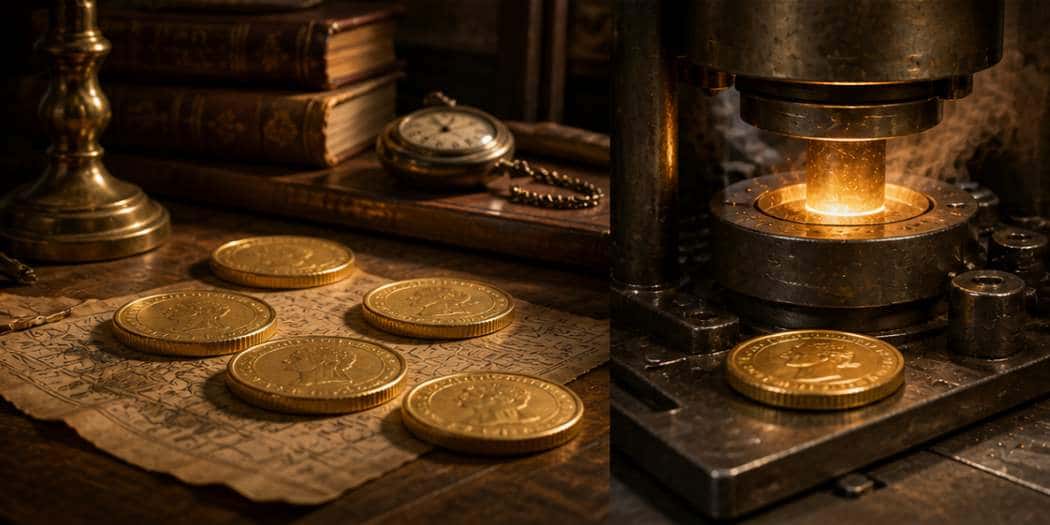
Why Austrian Ducat Gold Coins Are Gaining Attention in Today’s Market
As gold prices remain elevated and investors continue seeking both liquidity and historical value, Austrian ducat gold coins are experiencing renewed interest across global bullion markets. With the spot price of gold trading at elevated levels, buyers are increasingly looking beyond standard bullion rounds toward coins that offer both gold content and numismatic appeal. The distinction between original ducats and modern restrikes has become especially relevant, as collectors and investors weigh authenticity, scarcity, and pricing efficiency. In a market shaped by inflation concerns, central bank gold accumulation, and rising demand for tangible assets, these historic Austrian coins are once again entering the spotlight.
Understanding the Structure Behind 1 and 4 Ducat Coins
Austrian ducat gold coins are unique in both composition and format, offering an alternative to traditional bullion coins. The 1 ducat contains approximately 0.1106 troy ounces of gold, while the 4 ducat holds about 0.4438 troy ounces—making it nearly equivalent to half an ounce in gold weight. Both are struck in exceptionally high purity at .986 fine gold, which exceeds the standard .900 composition found in many historic coins.
Their ultra-thin planchet design gives them a larger diameter relative to weight, making them visually striking and easily distinguishable. This structure was historically intended to facilitate trade and reduce wear, but today it contributes to their collectible appeal. Unlike modern bullion coins such as the American Gold Eagle or Canadian Maple Leaf, ducats occupy a hybrid category—part historical artifact, part bullion investment.
Original Ducats vs Restrikes: What Investors Need to Know
The most important distinction in Austrian ducat gold coins lies between original strikes and restrikes, and understanding this difference is critical for buyers.
Original ducats were minted during the Austro-Hungarian Empire, particularly under Emperor Franz Joseph I, between the mid-19th and early 20th centuries. These coins circulated as currency and carry genuine historical provenance, which often commands a premium based on condition, rarity, and year of issue.
Restrikes, on the other hand, are modern reproductions minted by the Austrian Mint using the original dies and bearing the date “1915,” regardless of when they were actually produced. These coins are not intended to deceive; rather, they are officially sanctioned reissues designed to meet modern bullion demand. Because they are produced in larger quantities, restrikes typically trade much closer to the gold spot price, making them more accessible for investors focused on metal content rather than rarity.
Pricing Behavior: How Ducats Track the Gold Market
In today’s environment, pricing dynamics for ducat coins are closely tied to broader movements in the gold market, yet they exhibit distinct behavior depending on type.
Restrike ducats generally follow gold spot price trends with relatively tight premiums. Their appeal lies in offering fractional gold exposure at competitive pricing, often below the premiums associated with fractional bullion coins. This makes them an efficient entry point for investors seeking flexibility in position sizing.
Original ducats, however, behave differently. Their value is influenced not only by gold content but also by numismatic factors such as mintage, condition, and collector demand. During periods of heightened interest in historical coins—often driven by economic uncertainty—these premiums can expand significantly, decoupling from pure bullion pricing.
This dual pricing structure allows ducats to serve both bullion investors and collectors, depending on their objectives.
Supply Dynamics and Minting Continuity
One of the reasons Austrian ducat gold coins remain widely available today is the Austrian Mint’s long-standing practice of producing restrikes. This continuous supply ensures that the coins maintain liquidity in the global bullion market, unlike many historic coins that become increasingly scarce over time.
However, original ducats are a finite resource. Their supply is limited to surviving examples from historical circulation, and many have been lost, melted, or absorbed into long-term collections. This creates a natural scarcity dynamic that supports their value over time.
At the same time, global gold demand—particularly from central banks and institutional buyers—has tightened overall bullion supply. While ducats are not typically used for institutional accumulation, broader market constraints can influence pricing and availability across all gold products, including restrikes.
Historical Authority and the Franz Joseph Legacy
The enduring appeal of Austrian ducat gold coins is closely tied to the legacy of Emperor Franz Joseph I, whose reign spanned nearly seven decades. His portrait appears on both original and restrike coins, symbolizing a period of economic expansion and imperial influence in Central Europe.
These coins were widely used in international trade, particularly in regions where trust in sovereign currency was essential. Their high gold purity and consistent weight made them reliable instruments of exchange, earning them a reputation that persists today.
For modern buyers, this historical context adds an intangible layer of value. Owning a ducat is not just about holding gold—it is about holding a piece of monetary history that predates modern financial systems and central banking frameworks.
Investor Positioning: Bullion Efficiency vs Numismatic Upside
Choosing between original and restrike ducats ultimately comes down to investment strategy.
For those prioritizing gold accumulation and liquidity, restrikes offer clear advantages. They provide exposure to gold at competitive premiums, are easily recognizable, and can be traded globally with minimal friction. Their consistent production ensures availability, making them suitable for both new and experienced investors.
Original ducats, however, appeal to a different type of buyer—one who values rarity, historical significance, and potential numismatic appreciation. While they may carry higher upfront costs, they also offer the possibility of outperforming gold during periods of strong collector demand.
This dual-market positioning is what sets Austrian ducat gold coins apart. Few products offer such a clear distinction between bullion efficiency and collectible upside within the same format.
Where Ducats Fit in a Changing Gold Market
As global markets continue to navigate inflation, geopolitical uncertainty, and shifting monetary policy, gold remains a central component of wealth preservation strategies. Within this landscape, Austrian ducat gold coins are likely to maintain their relevance due to their unique positioning.
Restrikes will continue to attract investors seeking efficient exposure to gold, particularly as premiums on other fractional products fluctuate. Meanwhile, original ducats may see increased demand as collectors and investors diversify into historically significant assets that offer both tangible value and narrative depth.
In a market where differentiation matters, gold ducats provide a compelling option—bridging the gap between modern bullion and historic coinage in a way few other products can match.