View Charts
2026-S Proof Lincoln Cent: Why Certified Examples Matter
 0
A Familiar Penny Enters a New Era of Collecting
The 2026 Lincoln cent marks a significant turning point in American coinage. Following the end of penny production for general circulation in 2025, the U.S. Mint continued issuing Lincoln cents in 2026 exclusively through collector products. These coins were not manufactured for everyday transactions, making the 2026 issues fundamentally different from the billions of pennies previously produced for circulation.
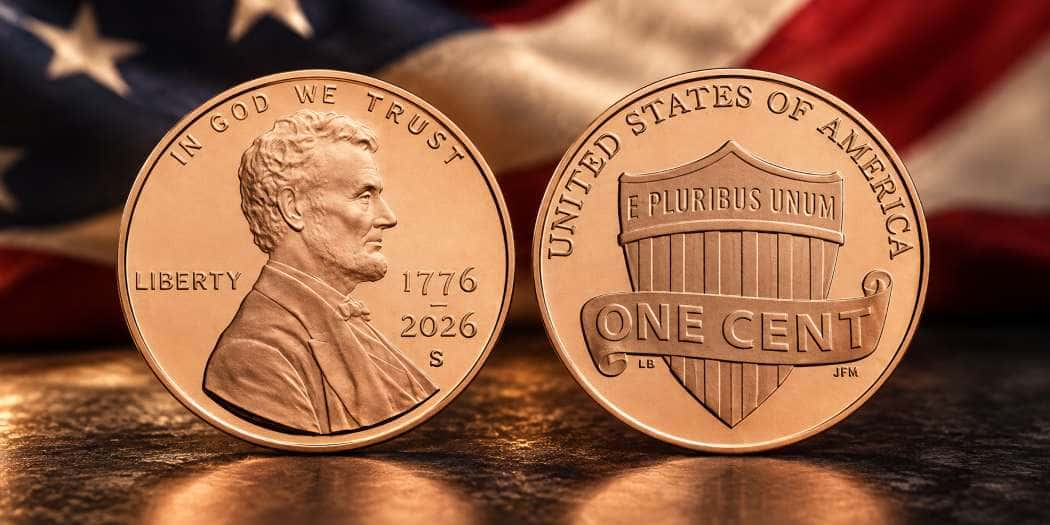
The 2026-S Proof Lincoln cent is part of this new collector-only chapter. Featuring the dual date 1776–2026 in recognition of America's 250th anniversary, it retains Abraham Lincoln's portrait and the familiar Union Shield reverse. Its specially prepared proof surfaces distinguish it from ordinary business-strike pennies, while its historical context adds another dimension to its collector appeal.
For collectors interested in professionally graded coins, the 2026-S proof cent offers an additional consideration: certification. Beyond the coin's anniversary significance, numerical grades, surface designations, and special certification labels can influence how individual examples are evaluated and valued.
What Makes the 2026-S Proof Cent Distinctive?
The 2026-S Lincoln cent was struck at the San Francisco Mint specifically for numismatic products, including the 2026-S Semiquincentennial Proof Set. It carries the S mint mark, features a copper-plated zinc composition, and weighs 2.5 grams. Unlike coins manufactured for circulation, proof cents are produced using specially prepared dies and planchets to achieve reflective fields and sharply defined design details.
The distinction between collector-only production and circulating coinage is particularly important for the 2026 issue. Although existing Lincoln cents remain in circulation, newly struck 2026 examples were distributed through numismatic offerings rather than released into everyday commerce. Collectors may encounter these coins in their original Mint packaging or as individual examples that have been removed from sets and professionally certified.
Bullion Exchanges previously explored the anniversary design, distribution, and broader collecting considerations in its 2026 Lincoln cent guide. The focus here is more specific: how professional grading, proof quality, and certification labels affect the appeal and potential market value of the 2026-S proof cent.
Understanding PF 69, PF 70, and Cameo Contrast
A proof finish describes how a coin was manufactured, not its numerical grade. Specially prepared dies and planchets create reflective fields and sharply defined design elements. A grading service then assesses the finished coin's condition. Two examples struck by the same mint can receive different grades because of tiny marks, spots, or other post-production imperfections that become apparent under examination.
On the standard 70-point scale, PF 69 describes a nearly flawless proof, while PF 70 indicates no post-production imperfections visible under the grading service's specified examination standard. The difference may be difficult to see without magnification, yet it can matter considerably to collectors pursuing top-grade certified sets. The NGC grading scale explains these numerical grades and distinguishes proof coins from Mint State pieces.
Surface designations add another layer. Deep Cameo, commonly abbreviated DCAM by PCGS, refers to strong contrast between frosted design elements and mirrored fields; NGC uses the comparable term Ultra Cameo. Copper-color designations such as Red describe a different attribute.
The PCGS listing for the 2026-S Semiquincentennial cent confirms distinct certification entries, including proof Deep Cameo versions with release-related designations. That establishes the issue's presence in the professional grading system, but it does not establish that every certified combination is rare or that a particular grade will command a lasting premium.
What First Strike and First Day of Issue Actually Mean
Certification holders may also identify a 2026-S proof cent as First Strike or First Day of Issue. These terms describe eligibility under a grading company's submission and documentation rules, not an independently verified sequence showing that a coin was literally among the first pieces struck from the dies. Collectors should distinguish the timing designation from the numerical condition grade.
For example, Bullion Exchanges has listed a PCGS PF 69 First Strike 2026-S proof Lincoln cent, as well as a PF 70 First Day of Issue (FDOI) version. The first combines a near-perfect grade with a release designation; the second combines a top numerical grade with a different timing designation.
Labels and pedigrees can make comparisons less straightforward. Different holder designs may commemorate the 250th anniversary, identify a particular release program, or appeal to collectors building matching-label sets. The NGC explanation of release designations is useful for understanding why a designation can depend on submission records and why a decorative label alone should not be mistaken for a limited coin mintage.
When comparing offers, verify the exact coin date, mint mark, grade, service, strike designation, and label description. A headline advertising a certified anniversary penny may conceal meaningful differences in those details.
Does Certification Make the Penny More Valuable?
Professional grading provides an independent assessment and a protective holder, but neither guarantees appreciation. The 2026-S cent's underlying appeal comes from its anniversary dual date, proof manufacture, and place in the post-circulation era of the denomination. Certification adds a standardized way to describe condition and authenticity, which can help buyers compare individual examples and may make resale easier within the certified-coin market.
The premium paid for that convenience deserves scrutiny. Grading, handling, shipping, and special labels create costs that can be reflected in retail prices. A PF 70 example may command more than a PF 69 coin, but the difference can shift as additional coins are graded and more examples reach dealers and auctions. Population figures are snapshots, not fixed mintage totals, and they may change with new submissions or grading-service reporting adjustments.
Collectors can also pursue the coin in its original proof set rather than as a separately encapsulated cent. The set preserves the surrounding anniversary issues and original presentation, while a certified single emphasizes condition, grade consistency, and display. A complete-set collector and a Lincoln cent specialist may reasonably assign different value to the same coin.
A useful comparison considers the total purchase price, current dealer buyback indications, verified recent sales of the same grade and label, and the cost of acquiring a comparable example elsewhere. Asking prices alone are weak evidence of realizable resale value. For those exploring the broader denomination, Bullion Exchanges' Penny Vault places the modern certified issue alongside earlier Lincoln cents and other collectible pennies.
How to Approach the Certified 2026-S Cent
The strongest reason to collect a certified 2026-S proof Lincoln cent is its combination of historical context and clearly documented condition. It commemorates America's 250th anniversary while illustrating the penny's transition from routine circulating production to collector-focused issues. A certified holder can preserve that story in a convenient format, especially for collectors building graded Lincoln cent runs or modern proof collections.
Before paying a substantial premium, decide which attribute matters most: the dual date, the proof finish, a top numerical grade, a particular release designation, or the original set as a whole. Then compare like with like. A PF 69 First Strike and a PF 70 First Day of Issue are not interchangeable products, and their prices should not be evaluated as though they were.
As more examples enter grading-service databases and secondary markets, the relationship between population, demand, and premiums should become clearer. Until then, the most defensible approach is to treat certification as useful information and presentation—not as a promise of scarcity or future profit. That perspective leaves room to appreciate a distinctive Lincoln cent without confusing a collectible milestone with a guaranteed investment.