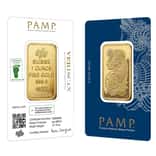
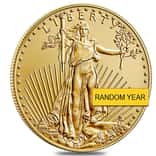
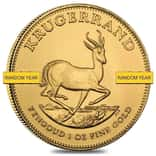
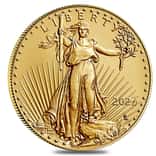
View Charts
Sweden Gold Prices
Understanding the price of gold in various markets is essential for making informed decisions when purchasing this highly sought-after precious metal, renowned for its investment potential worldwide. At Bullion Exchanges, we offer a live Gold Price Chart on our website to ensure you can transact gold at the most favorable prices.
SWEDISH CURRENCY AND MINTS
When trading gold in Sweden, you will most likely use the local currency, the Swedish krona, also known as the Swedish crown, which is subdivided into 100 öre. Although prices are still quoted in öre, cash payments are rounded up to the nearest krona.
In 1876, the Swedish krona replaced the riksdaler after Sweden joined the Scandinavian Monetary Union, alongside Denmark and Norway. All three countries adopted the krona as their currency, adhering to the gold standard; one krona was defined as 1/2480 of a kg of pure gold.
Sweden's central bank, the Riksbank, is responsible for the country's monetary policy. Established in 1668, the Riksbank is the world's oldest central bank. Swedish currency was backed by gold, and banknotes were exchangeable for gold until 1931 when a temporary law released the bank from this commitment. This law was renewed annually until the bank's separation from the government in 1975 under the new constitution. Since then, the bank has not been obligated to exchange notes for gold.
AB Myntverket, a private Swedish manufacturer, releases commemorative coins and medals. However, since 2008, all Swedish legal tender coins have been produced by the Mint of Finland, Myntverket's parent company.
GOLD PRICE FACTORS IN SWEDEN
As a reliable investment for any precious metals portfolio, gold can be acquired in the form of coins, rounds, and bars. Like other investments, gold's value fluctuates, influenced by several factors, including:
- Inflation
- Varying interest rates
- Currency markets
- Central bank activity
- Investment and product interest
SWEDEN’S ECONOMY
Sweden boasts a highly developed, export-oriented economy, with primary exports encompassing iron and steel products, machinery, motor vehicles, and timber. In the 19th century, the country transitioned from an agricultural to an industrialized economy. Most Swedish businesses are privately owned and market-oriented, with goods and services tailored to consumer demands and needs.
As a neutral nation during World War II, Sweden did not face the economic repercussions experienced by many other European countries. However, in the 1990s, Sweden underwent its most severe recession since the 1930s. The Swedish krona's fixed exchange rate collapsed in 1992, leading the Riksbank board to establish a floating exchange rate a few months later. Additionally, the central bank of Sweden instituted an inflation target. With a growing economy, the demand for gold and other precious metals in Sweden may continue to rise.
Popular Products