
 View Charts

Gold spot price today
At 4:00 AM ET on November 13, 2026, Gold is trading at a live spot price of $3,908.80 per ounce, $125.67 per gram, and $125,670.84 per kilogram in U.S. dollars (USD).
Track the live gold price today with continuously updated market data and interactive charts. View gold prices per troy ounce, gram, and Kilo in U.S. dollars, explore historical trends, and monitor the market value used to price physical gold bars and coins.
Because gold trades nearly 24 hours per day across New York, London, and Asian markets, the gold price updates constantly as currency movements, economic data, and global demand conditions evolve.

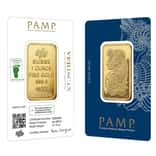
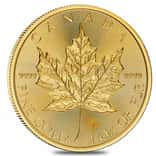

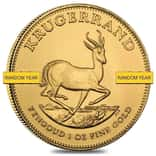


Sign up for spot price alerts
Free! Sign up for email and/or SMS Spot Price Alerts
What Is the Live Gold Price Today?
The gold spot price is the globally recognized benchmark used by institutional traders, central banks, refiners, and bullion dealers. The spot price reflects prevailing market quotations for gold available for near-term settlement, with pricing influenced by global over-the-counter trading and major futures markets.
Major pricing centers influencing the spot market include COMEX in New York, the London Bullion Market Association (LBMA), and the Shanghai Gold Exchange. While exchange rates affect pricing in different currencies, the underlying gold spot price remains globally standardized.
When purchasing physical gold, buyers pay the spot price plus a premium. When selling, transactions are based on the prevailing bid relative to spot.
What Determines the Price of Gold?
The gold spot price moves in response to global supply and demand dynamics, including jewelry consumption, investment flows, and central bank reserve accumulation. Currency strength—particularly movements in the U.S. dollar—often influences price direction, as gold is priced internationally in dollars.
Interest rate expectations and inflation trends play a central role as well. Gold is widely viewed as a hedge against inflation and currency debasement, and periods of declining real yields often support higher gold prices. During geopolitical uncertainty or financial stress, safe-haven demand for gold typically increases.
Short-term volatility can also result from futures market positioning and flows into or out of gold-backed exchange-traded funds (ETFs).
Gold Spot Price vs. Futures Price: What's the Difference?
The gold spot price reflects immediate settlement for physical gold. In contrast, the gold futures price represents contracts for delivery at a specified future date. Futures may trade at a premium or discount to spot depending on interest rates, storage costs, supply expectations, and broader market sentiment.
Understanding the relationship between spot and futures pricing provides insight into market structure and forward expectations.
What Do Gold Bid and Ask Prices Mean?
Two prices are typically quoted in the market:
-
Bid Price — the price buyers are willing to pay
-
Ask Price — the price sellers are offering
The difference between these prices is known as the spread. Physical gold products trade above the raw spot price due to minting costs, fabrication expenses, distribution, and dealer operations. Evaluating premiums relative to the live gold price helps investors understand the total acquisition cost of bullion products.
Why Does the Gold Price Change Every Day?
The current gold price fluctuates in response to:
-
Federal Reserve policy decisions
-
Inflation and employment data releases
-
Currency market volatility
-
Global equity market performance
-
Commodity price movements
-
Central bank reserve adjustments
Because gold trades globally across overlapping market sessions, price momentum can accelerate when major financial centers are active simultaneously.
Why Is Gold Considered a Safe-Haven Asset?
Gold is widely considered a safe-haven asset because investors often turn to it during periods of economic uncertainty, inflation, and financial market volatility. Unlike stocks or bonds, physical gold is not dependent on the financial performance of a single company or government. Its historical role as a store of value, global liquidity, and limited supply contribute to its appeal as a way to preserve purchasing power over the long term.
Demand for gold often increases during geopolitical tensions, banking-sector stress, and periods of declining confidence in traditional financial markets. Gold prices may also benefit from a weaker U.S. dollar or falling real interest rates, which reduce the opportunity cost of holding an asset that does not generate interest income.
Central banks maintain substantial gold reserves as part of their monetary strategies, reinforcing the metal's importance in the global financial system. Although gold prices can fluctuate significantly in the short term, many investors use gold to diversify their portfolios and help manage risk during uncertain economic conditions.
What Does Gold Price History Reveal About Long-Term Performance?
Over decades, gold has served as a store of value, a portfolio diversifier, and a hedge against inflation. Historical gold price charts demonstrate how the metal responds to economic cycles, monetary policy shifts, geopolitical instability, and currency fluctuations.
Reviewing long-term performance alongside current market conditions provides perspective for both active traders and long-term investors.
How Does Gold Compare to Other Precious Metals?
Gold does not trade in isolation. Investors often compare price movement across metals to identify broader commodity trends and relative value opportunities.
You can also track:
Comparing live spot prices across metals helps investors evaluate industrial demand shifts, safe-haven flows, and diversification strategies within the precious metals market.
How Can You Track Live Gold Price Alerts?
Bullion Exchanges provides tools designed to help you respond quickly to gold market movement:
-
Gold Price Alerts — Set a target price and receive notifications when the gold spot price reaches your level.
-
Market Alerts — Track percentage or dollar-based price changes in real time.
-
Bullion Exchanges App — Access live gold pricing, interactive charts, and customizable alerts directly from your mobile device.
Price alerts are available via email, SMS, and push notifications, helping you act confidently whether you plan to buy during pullbacks or sell during rallies.
How Can You Buy and Sell Gold Based on Today's Price?
Bullion Exchanges combines real-time gold price tracking with transparent pricing on physical gold products. Explore our selection of gold bars, gold coins, and pre-1933 gold pieces, all priced directly in line with current market conditions.
Whether you are buying bullion, diversifying your holdings, or selling gold, tracking current prices can help you compare offers, evaluate premiums, and make more informed decisions.