
 View Charts
Trade Dollar
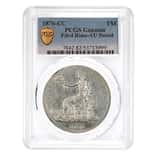
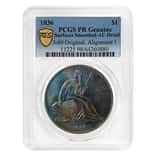
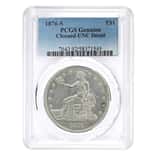
History of the Trade Dollar
The Trade Dollar, minted by the U.S. Mint between 1873 and 1883, was created to compete with popular Asian silver trade coins, particularly the Mexican peso, which dominated commerce in the region. The existing American dollar was too light in weight to effectively compete with these foreign coins, forcing American merchants to exchange them for other currencies. The idea of issuing a United States version of the silver Trade Dollar emerged in the 1860s, during a period of declining silver prices brought on by the gold rush. Congress finally authorized the Trade Dollar with the passage of the Coinage Act of 1873.
Initially struck in 1873, the Trade Dollar was primarily sent to China, where the U.S. Treasury anticipated the coins would be melted, allowing the government to profit from the seigniorage. However, as private bullion producers began minting Trade Dollars, these coins reentered U.S. circulation, causing their value to drop below one dollar. This led to the coin's demonetization in 1876, although business production continued until 1878. Proof versions of the Trade Dollar were minted until 1883, making these coins highly sought after by collectors today.
Trade Dollars as Collectibles
The U.S. Trade Dollar is one of the most popular silver coins minted by the United States, struck from .900 fine silver with a 10% copper alloy. Each coin weighs 27.2 grams (420 grains), giving it a solid heft and appeal for silver investors. Though production ended in the 1880s, these coins remain in demand due to their historical significance and silver content.
In 1908, ten proof coins marked with the year 1884 and five with the 1885 mark were discovered. However, as these coins were not listed in official mint records, their authenticity remains in question. The value of Trade Dollars varies based on their condition, rarity, and the presence of "chop marks," small Chinese characters stamped on some coins to certify their silver content. These factors make the Trade Dollar an exceptional and valuable addition to any coin collection.
Design of the Trade Dollar
The design of the Trade Dollar was created by U.S. Mint Chief Engraver William Barber. On the obverse, Liberty is seated on bales of merchandise, symbolizing commerce, holding a scroll inscribed with "Liberty" in her left hand and an olive branch in her right. A sheaf of wheat is placed behind her, representing the agricultural strength of the United States, and 13 stars surround her, symbolizing the original colonies.
The reverse features a bald eagle clutching an olive branch in its left claw and three arrows in its right, a classic symbol of peace and military preparedness. The simple yet elegant design helped the Trade Dollar stand out in international markets.
Challenges in Production
In 1874, complaints began to surface about the quality of the Trade Dollar's strikes, prompting Barber to lower the relief and make adjustments to the design over the next two years. Since these coins were widely traded in the Far East, many were counterstamped with "chop marks," verifying their silver content and authenticity in Chinese markets. These marks, while diminishing the aesthetic of the coins for some, have become a unique aspect of their history and appeal to collectors.
Tips for Buyers
When purchasing Trade Dollars, it's essential to buy from trusted and authorized dealers like Bullion Exchanges to avoid counterfeit coins. Be wary of listings for Trade Dollar coins with dates such as 1797, 1871 or 1872, as the first genuine U.S. Trade Dollar was not minted until 1873. Similarly, circulating Trade Dollars were struck only until 1878, with proof versions produced between 1879 and 1883. Always verify the authenticity and history of the coin before making your purchase. We invite you to visit our coin values page dedicated to U.S. Trade Dollars for more information about this fascinating short-lived series.
If you have any questions or need assistance with purchasing Trade Dollars, feel free to contact us at Bullion Exchanges. Our knowledgeable customer service team is here to help you find the perfect addition to your collection.