View Charts
Is There Gold and Silver on the Moon? What Scientists Know
 0
0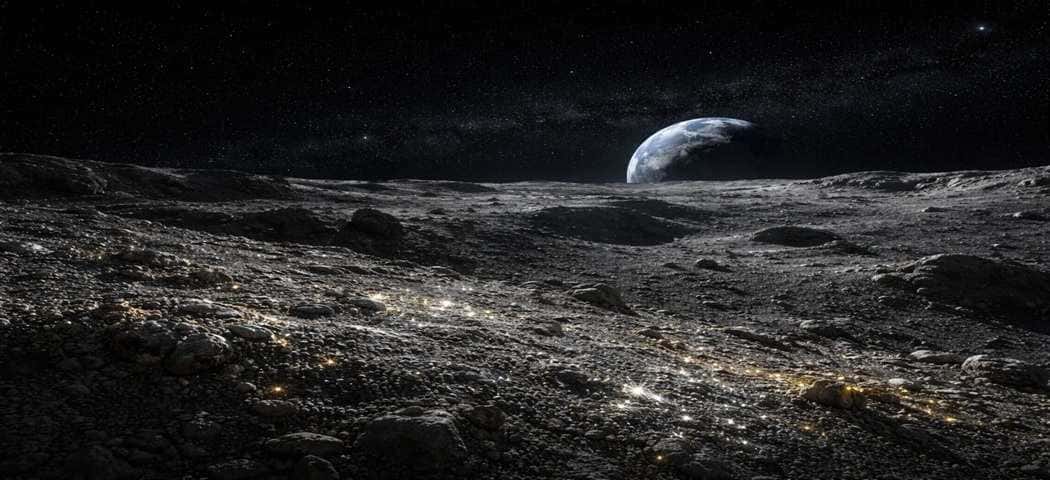
Are Precious Metals Found on the Moon?
The idea of precious metals on the Moon has captured global attention, especially as interest in space mining and future resource supply continues to grow. Many investors and enthusiasts are now asking: is there gold and silver on the Moon, and could it ever be mined?
While lunar exploration has confirmed the presence of both metals, the reality is far more nuanced. Gold and silver do exist on the Moon—but not in the concentrated forms that make them valuable or accessible today.
Is There Gold on the Moon?
Yes, gold is present on the Moon, but only in extremely small, dispersed quantities.
Samples collected during NASA’s Apollo missions revealed trace amounts of gold embedded within lunar rocks and soil. However, these concentrations are far below what is considered economically viable for mining on Earth.
Unlike terrestrial gold deposits, which form in veins through geological processes, lunar gold is spread in microscopic amounts across the surface, making extraction impractical with current technology.
Is There Silver on the Moon?
Silver, like gold, has also been detected on the Moon—but only in trace quantities.
Lunar samples show that silver exists within the regolith, mixed with other elements and materials. However, just like gold, it is not found in concentrated deposits.
From an investment or mining perspective, this means:
-
No known silver reserves
-
No current extraction potential
-
No near-term impact on the silver spot price
Despite this, silver’s presence reinforces the broader scientific understanding that the Moon contains a wide range of elements, even if they are not economically accessible.
How Did Gold and Silver Get to the Moon?
Scientists believe that both gold and silver were delivered to the Moon through:
-
Asteroid and meteorite impacts
-
Early solar system material formation
-
Cosmic debris accumulated over billions of years
Because the Moon lacks Earth’s geological processes—such as volcanic activity and hydrothermal systems—it cannot concentrate metals into large deposits.
As a result, gold and silver remain widely dispersed rather than clustered, which is the key reason they are not currently mineable.
Are Other Precious Metals Found on the Moon?
In addition to gold and silver, the Moon contains trace amounts of:
Platinum Group Metals (PGMs)
These metals are also believed to have arrived via asteroid impacts. Some localized areas, particularly impact craters, may contain slightly higher concentrations, but still not enough for commercial extraction.
What Resources Exist on the Moon?
Beyond gold and silver, the Moon contains a variety of materials that have attracted scientific and commercial interest. While most are not yet economically viable to extract, they play an important role in discussions around future space exploration and resource development.
Key lunar resources include:
-
Helium-3: A rare isotope with potential use in future nuclear fusion energy
-
Rare Earth Elements: Critical for advanced electronics and renewable technologies
-
Oxygen: Bound within lunar regolith and essential for sustaining human presence
-
Silicon and Aluminum: Abundant materials that could support construction and manufacturing
Unlike Earth, the Moon lacks geological processes that concentrate these materials into rich deposits. As a result, most resources—including precious metals—are widely dispersed, making extraction challenging with current technology.
Despite these limitations, the Moon is still considered a strategic stepping stone for future space operations, particularly as a base for deeper exploration and potential asteroid mining.
Why Lunar Mining Isn’t Viable Today
Despite the presence of gold and silver, several major barriers prevent mining:
1. Extremely Low Concentrations
Both gold and silver exist in trace amounts, requiring massive processing for minimal yield.
2. High Cost of Space Operations
Transporting equipment and materials from the Moon remains prohibitively expensive.
3. No Existing Infrastructure
There are no mining, refining, or transport systems established on the lunar surface.
4. Energy and Technology Limitations
Sustained operations would require advanced power systems and robotics not yet widely deployed.
For now, extracting gold or silver from Earth remains vastly more efficient.
Could Space Mining Change the Future of Precious Metals?
Technological advancements may eventually reshape the equation.
Developments in:
-
Robotics and automation
-
Space logistics
-
In-situ resource utilization (ISRU)
could make space-based resource extraction more feasible over time.
However, experts widely agree that asteroids—not the Moon—are more likely to provide meaningful supplies of gold, silver, and platinum in the future.
What This Means for Gold and Silver Investors
For investors tracking the gold spot price and silver price today, lunar mining remains a distant concept with no immediate market impact.
Key takeaways:
-
No current supply pressure from space
-
Earth-based mining remains dominant
-
Gold and silver continue to function as:
-Stores of value
-Inflation hedges
-Safe-haven assets
Market movements in precious metals will continue to be driven by macroeconomic factors—not space exploration.
Precious Metals Exist on the Moon—But Not in Usable Form
Gold and silver are both present on the Moon, but only in trace, widely dispersed amounts that are not currently viable for extraction.
While the concept of lunar mining is compelling, it remains firmly in the realm of future possibility rather than present reality.
For now, the real value of gold and silver remains here on Earth—where they continue to play a critical role in global markets, investment strategies, and financial stability.