View Charts
Common Cents Act Passes the House: What Happens to the Penny Next?
 0
0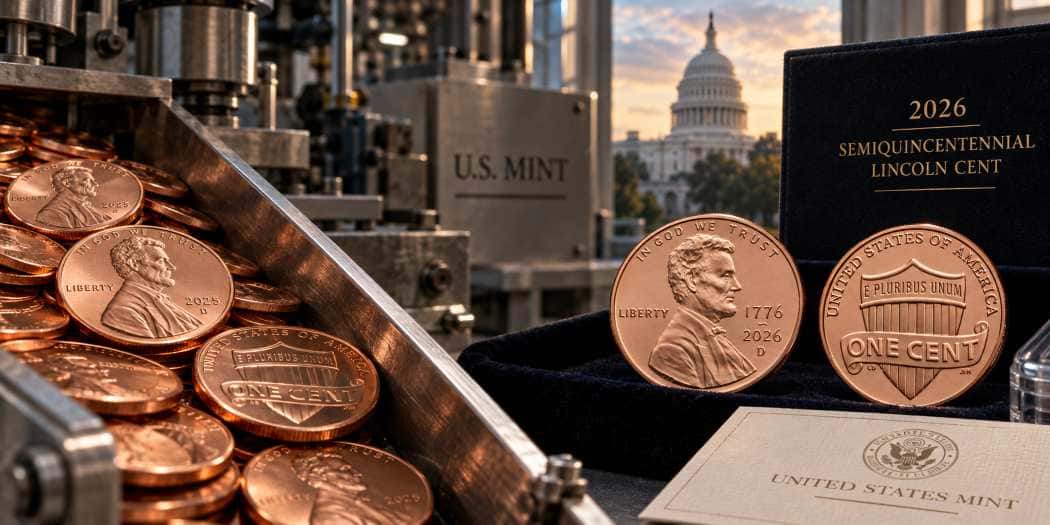
The Penny Stopped Being Made Before Congress Finished Its Work
The United States has already stopped producing pennies for everyday circulation, but Congress is still deciding what the country's post-penny system should look like. On September 14, 2026, the House passed H.R. 10167, the Common Cents Act, by voice vote. The bill would permanently end production of one-cent coins for general circulation, preserve existing pennies as legal tender, establish federal rules for cash rounding when exact change is unavailable, and allow the U.S. Mint to continue making collectible cents.
That sequence makes this transition unusual. The U.S. Mint struck its final circulating penny on November 12, 2025, ending a 232-year production run before Congress enacted permanent legislation eliminating the denomination from general production. The Common Cents Act would therefore do more than stop something that has already stopped administratively. It would establish a longer-term framework for pennies already in circulation, cash transactions, future collector issues, and other changes to U.S. coinage.
What Would the Common Cents Act Actually Change?
H.R. 10167 would direct the Treasury secretary to cease producing one-cent coins for general circulation while preserving the government's ability to make numismatic pennies. Existing cents would remain legal tender, an important distinction because ending production does not mean withdrawing or demonetizing the coins Americans already own.
The legislation also addresses a practical problem created as the available supply of pennies gradually declines. When exact change cannot be provided, the bill would permit cash transaction totals to be rounded to the nearest five cents under specified rules. Electronic and other non-cash payments could continue to be settled to the exact cent. The measure also calls for a Federal Reserve transition plan addressing penny distribution and requires reporting on the stability of the coin-distribution system.
The legislation also looks beyond the penny. It would authorize Treasury to test a potentially less expensive five-cent coin using a zinc inner layer and nickel outer layer, provided the alternative reduces production costs without significantly disrupting coin-operated equipment. Just as importantly, the measure would require Treasury to notify Congress before discontinuing any other circulating U.S. coin. That provision is significant because the end of circulating penny production began as an administrative action by Treasury rather than through a new law passed specifically to eliminate the denomination. The Common Cents Act would therefore establish additional congressional oversight before another circulating coin follows the penny's path.
The Penny Is Still Legal Tender—and Billions Remain
Stopping production does not mean pennies will suddenly disappear from cash registers, jars, collections, and bank deposits. Treasury says the federal government has stopped manufacturing new circulating pennies, but the Federal Reserve will continue recirculating approximately 114 billion existing cents for as long as practical. Consumers can still spend them, and businesses can continue depositing them with financial institutions.
The transition is therefore likely to unfold gradually. As fewer pennies return to the banking system and individual businesses encounter shortages, cash transactions may increasingly require rounding. Treasury's current guidance recommends symmetrical rounding when penny change is unavailable: totals ending in one, two, six, or seven cents generally round down, while totals ending in three, four, eight, or nine cents round up. Non-cash payments can continue to be processed to the cent. The House-passed legislation would provide a federal statutory framework for this changing environment rather than allowing the end of production to remain primarily an administrative decision.
For collectors, legal-tender status matters as well. Old cents are not being recalled, invalidated, or assigned a deadline for redemption. A Lincoln cent remains worth at least its face value regardless of whether the Mint makes another circulating penny. Anyone interested in how dates, varieties, condition, and scarcity can affect values beyond face value can explore Bullion Exchanges' Lincoln penny coin guide.
The Bill Has Passed the House, but It Is Not Law Yet
The legislative path is more complicated than a simple House-to-Senate progression because Congress has considered several versions of the Common Cents Act. The House previously passed H.R. 3074 in July, while the Senate advanced its own version, S. 1525, in August. The newly passed H.R. 10167 incorporates a broader framework addressing rounding, coin distribution, nickel composition, and procedures surrounding future coin discontinuation.
The key point is that both chambers must ultimately approve identical legislation before it can be presented to the president. H.R. 10167 has cleared the House but now requires Senate consideration; the Senate's earlier action on a different Common Cents Act measure does not by itself make the new House bill law. As of September 16, the House measure therefore represents another significant step toward permanently formalizing the end of circulating penny production rather than the completion of the legislative process.
Until that process is completed, Treasury's existing production suspension remains the immediate reality. The Mint is no longer striking ordinary cents for circulation, while existing coins continue moving through commerce.
The Last Circulating Penny Is Not the Last U.S. Penny
For collectors, perhaps the most important distinction is between the final circulating penny and the final penny of any kind. Those are not the same thing.
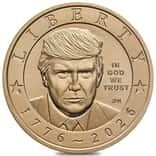
The Mint has explicitly said that although circulating production ended in 2025, it will continue producing numismatic cents. That policy is already visible in the 2026 Semiquincentennial program. This year's collectible Lincoln cent carries the dual date 1776 ~ 2026 and appears in annual products including Proof, Silver Proof, and Uncirculated Sets. These coins are made for collectors rather than released into general circulation.
That creates an unusual break in the Lincoln cent series. The denomination continues to exist legally and numismatically even though its regular role as newly produced pocket change has ended. Bullion Exchanges examined that distinction earlier this year in its guide to the 2026 dual-date Lincoln cent, including the ways collectors can obtain the non-circulating issue.
Will the Final Pennies Become Valuable?
The end of circulating production gives late-date Lincoln cents a clear place in U.S. monetary history, but it does not automatically make ordinary examples rare. Large quantities of modern pennies were produced before regular manufacturing stopped, and the enormous existing supply means collectors should distinguish historical significance from actual scarcity.
Condition, variety, mintage, provenance, certification, and the circumstances surrounding a particular issue can all matter more than simply having a late date. The Mint itself created a distinct collectible category around the end of production when it auctioned the final 232 circulating pennies in special three-coin sets. Each included Philadelphia and Denver circulating cents together with a 24-karat gold penny produced in Philadelphia. Those specially documented pieces occupy a very different numismatic category from an ordinary 2025 cent found in change.
The same distinction applies to 2026. A dual-date cent issued only through official Mint products has a different distribution history from billions of older circulation strikes. Whether those coins develop substantial secondary-market premiums will depend on collector demand, surviving populations, condition, grading outcomes, and eventual availability—not simply on the fact that circulating penny production has ended.
What Comes After the Penny?
The Common Cents Act is ultimately about more than retiring America's smallest circulating denomination. The penny's production economics forced Treasury and Congress to confront a broader question: how should the coinage system adapt when the cost and practical usefulness of a denomination no longer justify continued production?
For now, Americans still have pennies, and those coins retain their monetary value. What has ended is the continuous production of new cents for everyday commerce. The House-passed legislation would make that transition more permanent while establishing rules for the increasingly penny-less cash economy that follows.
For collectors, meanwhile, the story is not ending so neatly. The final circulation strikes, specially documented 2025 pieces, and collector-only 1776 ~ 2026 cents create several different endpoints to a series that began with the Lincoln cent in 1909 and with the U.S. one-cent denomination more than a century earlier. The penny may be disappearing from newly minted pocket change, but its numismatic life is continuing on a different track.
Related reading you may find interesting:
The Definitive 1909–1958 Lincoln Wheat Cent Guide for Modern Collectors